In response to our last post on 18th Century No-Knead “French” Bread, a reader asked us to share some original recipes that included crust chips and raspings as an ingredient.
If the typical 18th century diet could be reduced down to its two most rudimentary components, those two things would be bread and ale. People depended on them for their very survival. Bread was consumed, not only by itself, but probably more so as an ingredient in other dishes. Chips, raspings, and the crumb (the white spongy inner portion of the loaf) were all used as thickening agents for soup, binders for forced meats (e.g., ground meats, sausages, and meatloafs), primary ingredients in many porridges, possets, and puddings, flour adjuncts for other types of breads, as well stuffings and coatings for fowl and various other meats.
At first glance, there seems to be more 18th century recipes that use bread as an ingredient than there are that don’t. Here is just a sampling:
One of the beauties of modern technology is that these period cookbooks (and many others) are available online in word-searchable form. The captions above are links to the online cookbooks.
For many many many many other period recipes that use bread as an ingredient, click on any of these links and do a word search for “bread,” “crust,” or “crumb.” Based on your level of interest, be prepared to suddenly lose an hour or more of your time!
There have been a number of videos floating around on YouTube the past few years which present an interesting method of baking bread. It’s called “no-knead bread.” It’s an easy recipe that uses a simple dough baked in a Dutch oven.
I would encourage you to watch the video that seems to have started it all. It’s very worthwhile. No knead bread, because of its ultra-simplicity and great flavor, is a very innovative technique.
But, shhhhhh…I’ll let you in on a little secret. It’s not a new idea. In fact, no-knead bread has been around for hundreds of years.
And finally, this recipe from Elizabeth Moxon’s 1764 cookbook, English Housewifery:
English Housewifery, Elizabeth Moxon, 1764
Each recipe instructs the baker to work the dough as little as possible. Mix the ingredients with your hands and simply walk away. Nope! Don’t even think about kneading it!
Each of these recipes is for “French” bread. Now 18th century bread came in dozens of forms, differentiated by size, shape, and weight, as well as by ingredients and the quality of the flour. The boulangeries de Paris offered a cornucopia of bread styles, as did the bakeries of London and Philadelphia.
One particular bread, however, familiar to Englishmen and American Colonists alike was what they called “French” Bread. The name with which they christened this bread may have been just as much a commentary on French-style cookery as it was a delineation of its national origin. The French were known for their extravagant dishes and sauces which were often dripping with butter fat. French cooks were in demand for this reason in the higher British societies.
There are numerous other 18th century English recipes for French Bread. We found nine total. By the way, there are probably hundreds of 18 century English recipes that used French Bread as an ingredient, but we’ll talk about that later. All of the English recipes for French bread called for the use of milk instead of or in addition to water. Some also called for butter, and still others called for eggs. So it seems apparent that the term “French Bread” refers to an enriched bread.
Most English recipes for French bread called for fine white flour, however, we also found a recipe in Eliza Smith’s book for a French brown bread that used coarse-ground flour, grated bread crumb, and…wait for it…milk.
Brigg’s recipe for French Bread is preceded by a recipe for “English Bread the London Way.” By his heading and the juxtaposition of the two recipes, it seems apparent that he was making a comparison between the two styles. The most pronounced difference was the use of dairy fats in French bread.
Pain de Mie may be a modern descendant of such bread. Pain de Mie, or “bread of the crumb” is a fine white bread, similar to American “Pullman bread” that is baked in a special pan, resulting in loaf with a very thin or non-existent crust. Interestingly, some historic accounts suggest that Pain de Mie may have been introduced to France in the early 1900s by English tourists — a seemingly ironic twist of the dough.
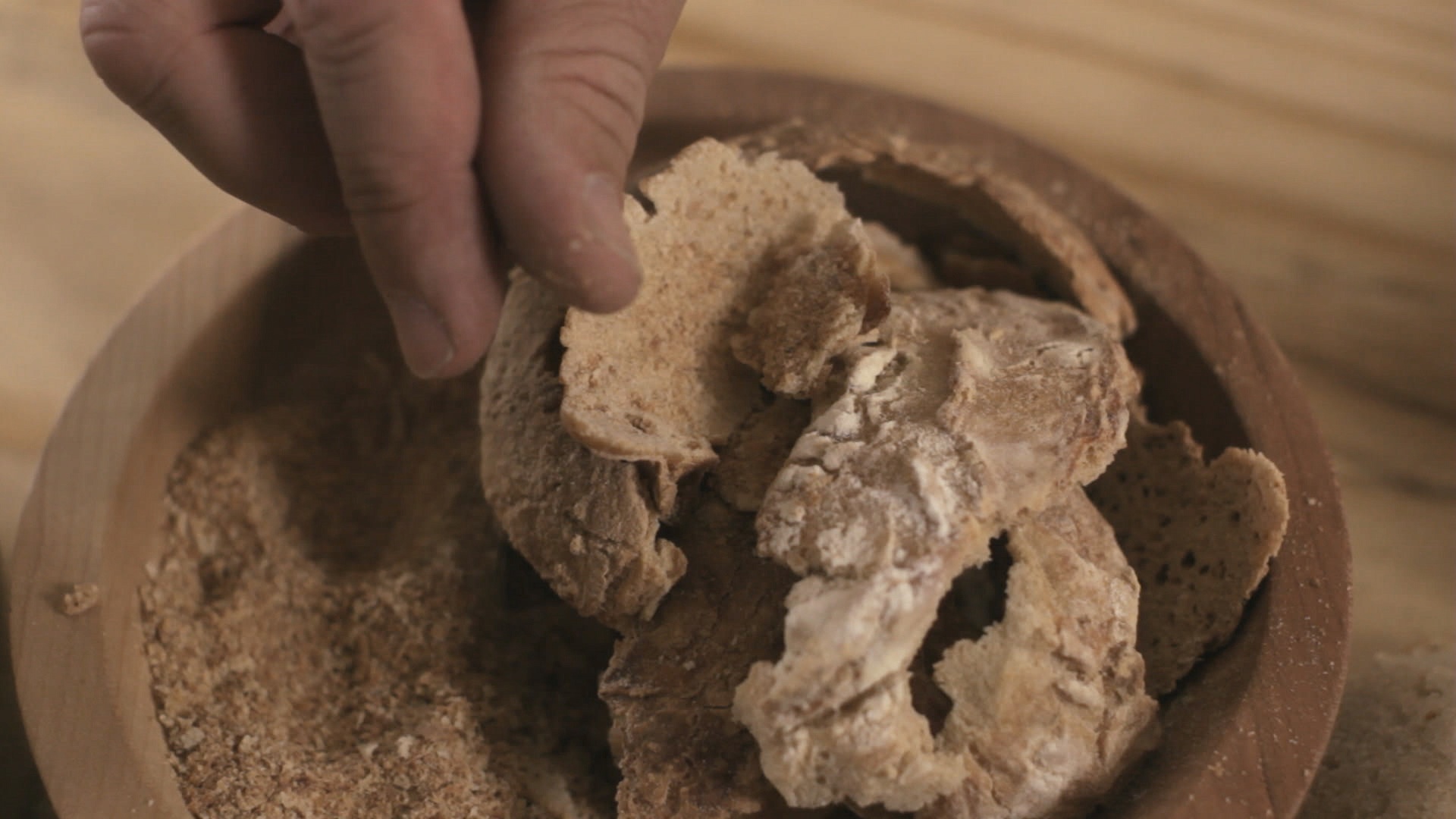
Crust chips and raspings were often used as an ingredient in other 18th century recipes.
While most modern bread enthusiasts enjoy the crispy-crackly crust of a properly baked artisan loaf, all of the English recipes we found for French bread required that the crust be either rasped off with a grater or chipped off with a knife, leaving nothing but the mellow white crumb structure beneath. It was in this crust-less form that French bread was most commonly used as an ingredient in so many other English recipes. The crust chips and raspings were also used.
Here’s our take of an 18th century English recipe:
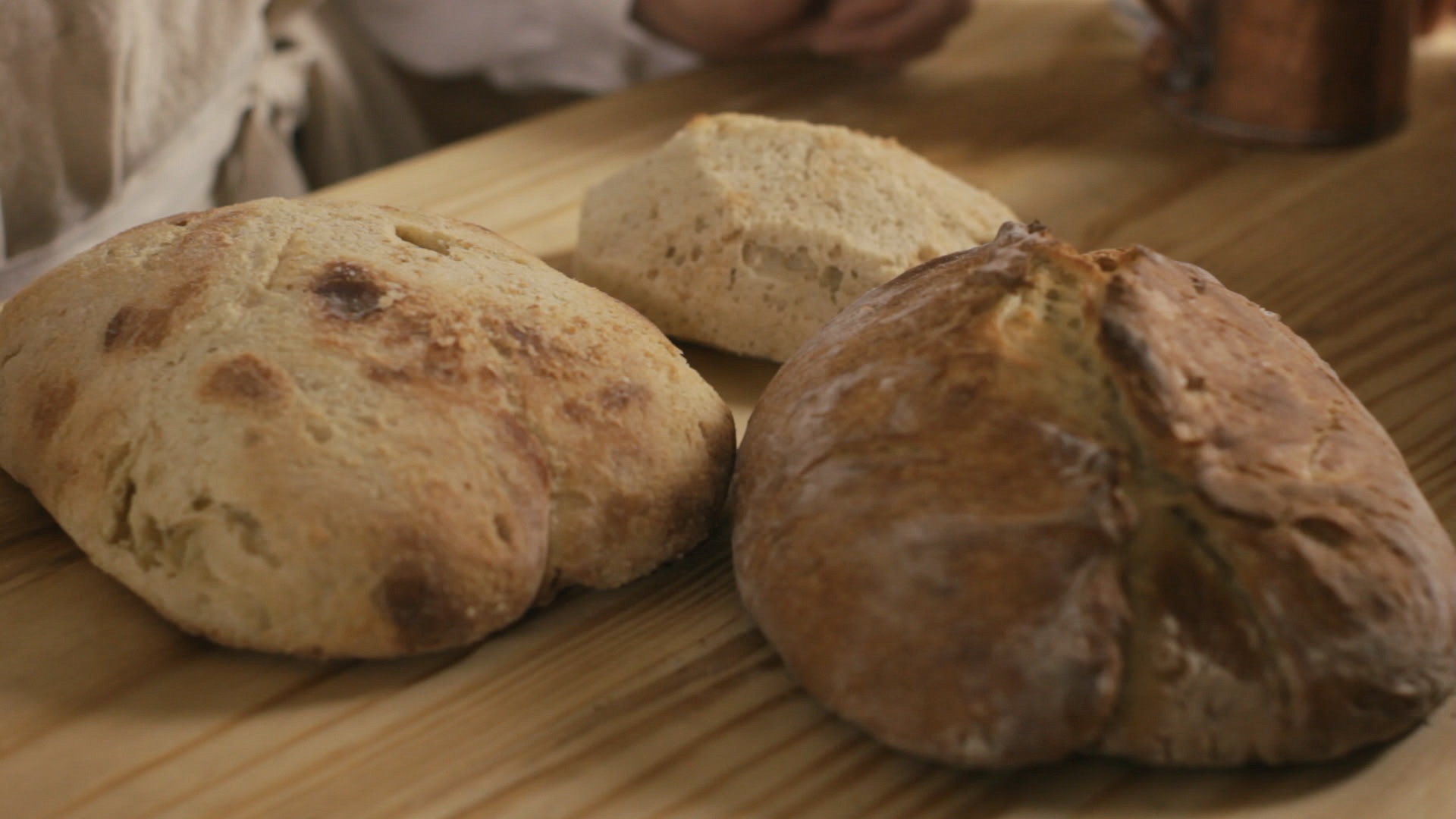
No-Knead “French” Bread
Most original recipes called for the use of fresh barm, which was the suds or “croisan” skimmed from the top of a brewing batch of ale. Unless you’re a homebrewer, it’s unlikely you have access to barm. You can make an imitation barm by mixing the following ingredients:
1/2 cup water (or you can use a good imported ale)
1 Tablespoon flour
1/4 to 1/2 teaspoon INSTANT yeast
Set your barm aside.
In a large bowl, mix together 3 cups of all-purpose flour with 1-1/2 teaspoons salt.
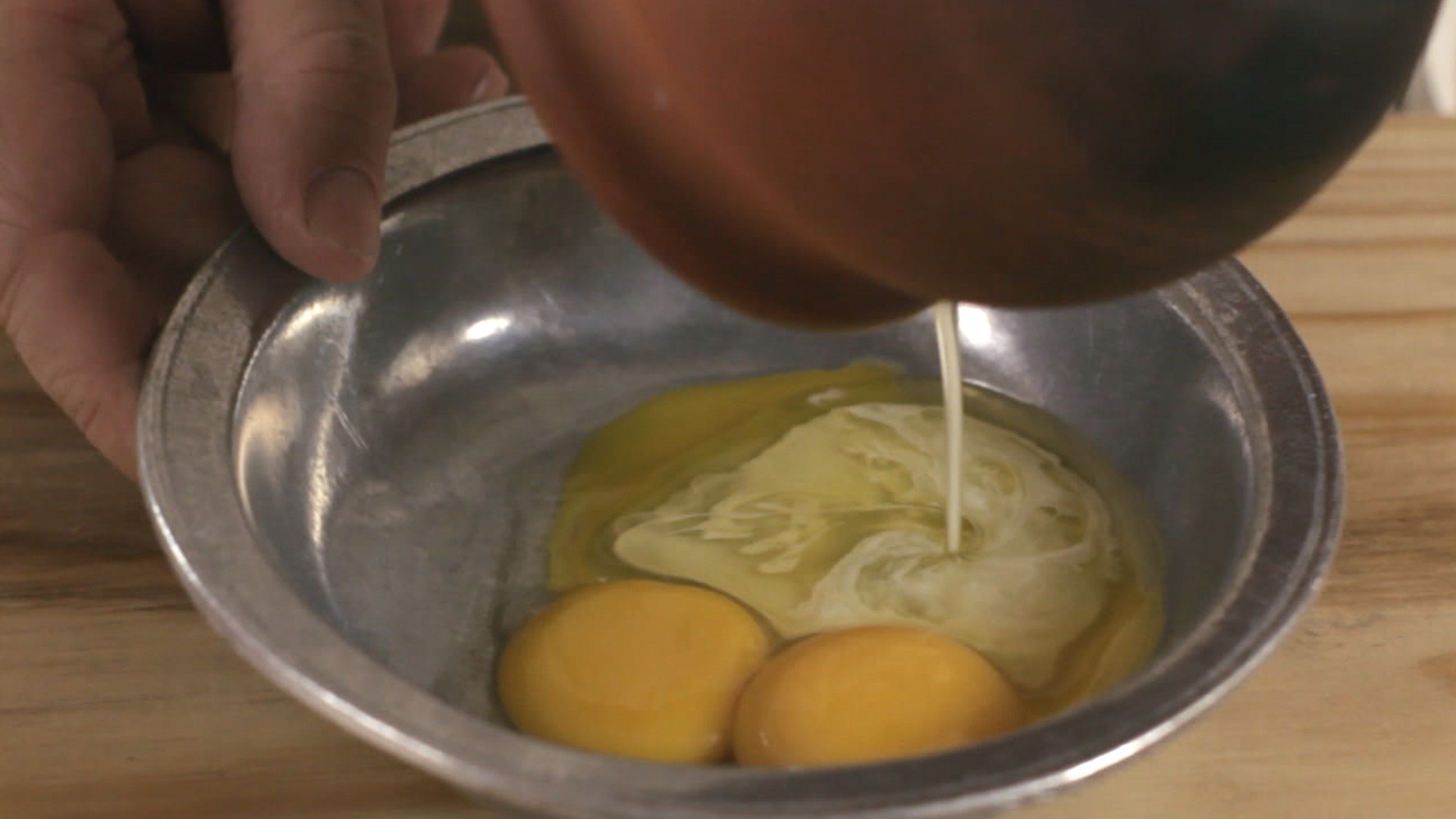
In a separate bowl, whisk together 3/4 to 1 cup milk with 1 egg white. In yet another bowl, whisk together 2 Tablespoons butter (just melted and not too hot, lest you cook your yolks) with 2 egg yolks. Finally, stir together the milk mixture and yolk mixture. Stir in your “barm” as well.
Egg yolks and melted butter
Now you may be asking, “Huh? What was the point of all that?”
Egg yolks are a natural emulsifier. They are made up of protein strings that are receptive to fats on one end and water on the other end. By mixing the egg yolks first with the melted butter and then with the milk, you are combining the butter fat with the milk at a molecular level. To mix them otherwise, the butter would simply float to the top of the milk in coagulated chunks. Yuck!
Enough of the science lesson.
Now it’s simply a matter of adding your wet ingredients to your dry ingredients. While all three original recipes above tell us to use our hands to mix the dough, Brigg is meticulous in describing how you should hold your fingers together at the tips.
Our experience suggests it’s fine to dig right in as long as momma’s not looking. You’ll want to mix it well, incorporating all the flour.
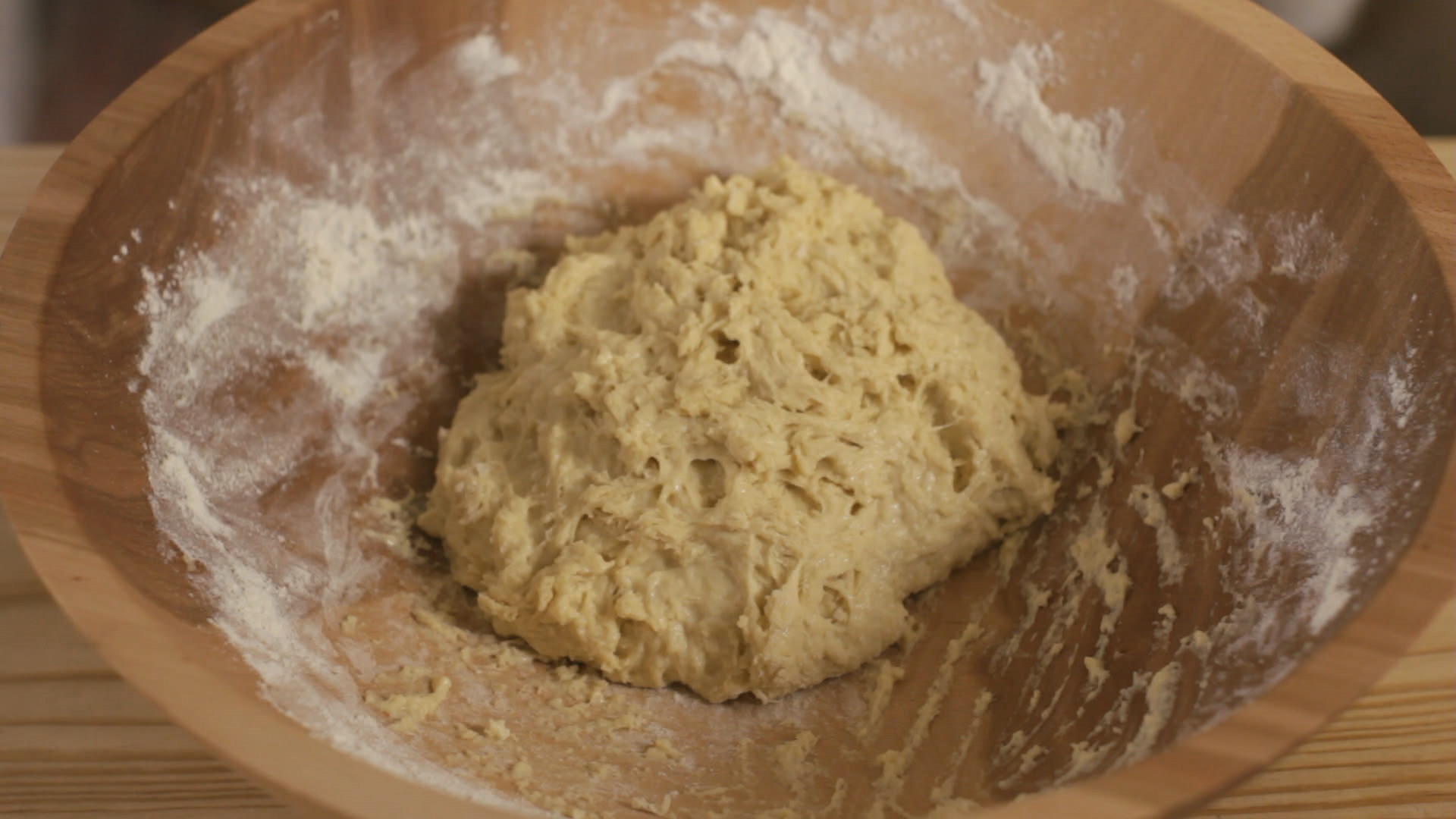
The dough is going to be very sticky. That’s good. Whatever you do, DON’T EVEN ATTEMPT TO KNEAD IT, otherwise it will not be No-knead bread!
Now in our video demonstration above, we suggest using a damp cloth to cover it. You probably need a couple of layers of damp cloth, because you don’t want a tough skin to develop on your dough while the yeast is doing its thing. A better choice is plastic wrap. Just press it right down on top of the dough.
Now set your dough aside in a warm spot to let it rise for 12 to 18 hours. We realize that’s a long time, but trust us, this will enhance the flavor of your bread. For another science lesson on why it does, check out Part 4, Part 5, and Part 6 of our 18th Century Breads video series.
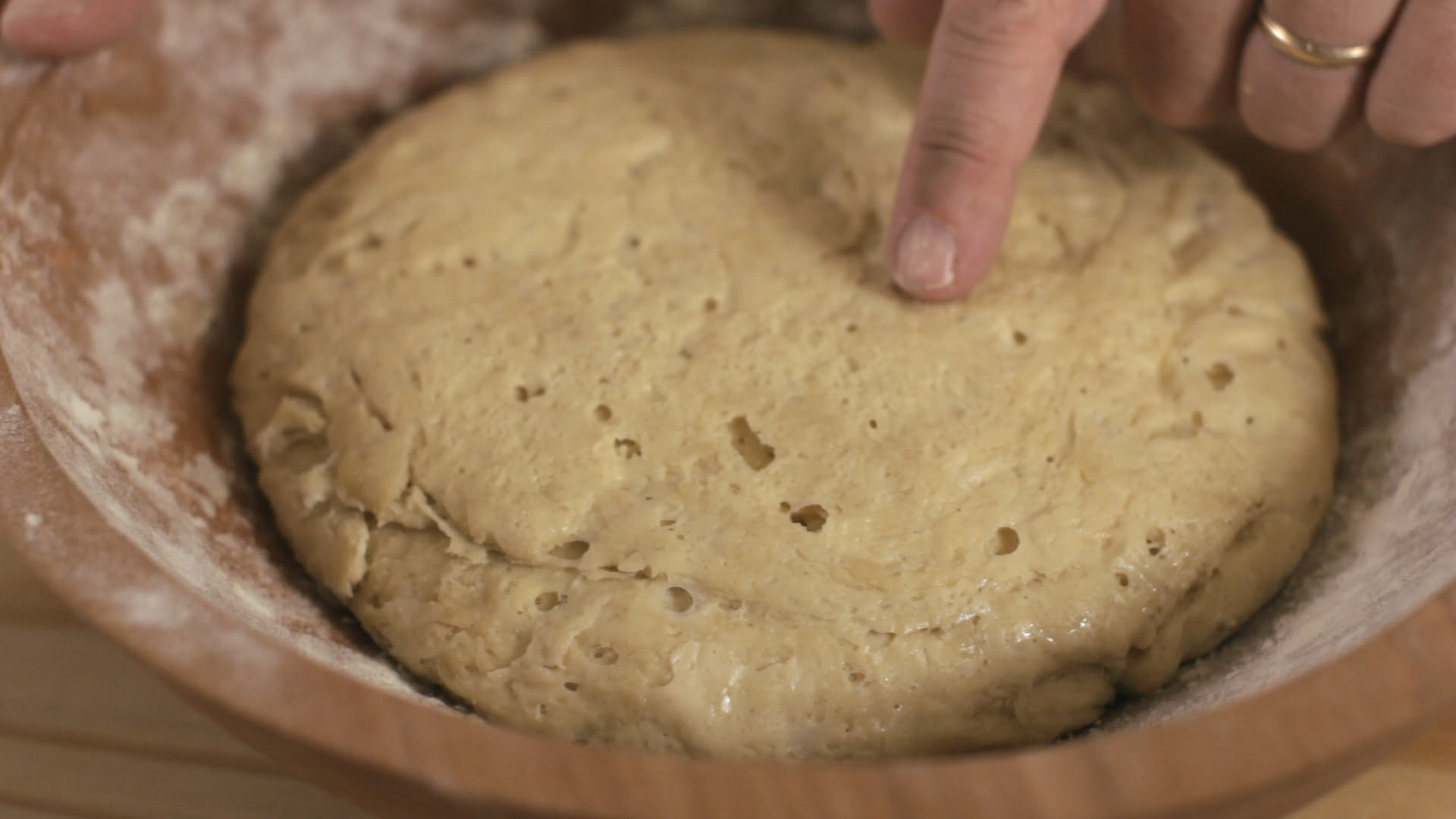
As the time approaches to bake your dough, you’ll notice it will have a spongy appearance to it. That’s good.
If you’re baking this at home in a Dutch oven, go ahead at this point and place your Dutch oven in the oven and preheat it to 450 degrees (F). Once the Dutch oven is preheated, sprinkle a little corn meal or wheat bran into the bottom of it. This will help keep the dough from sticking to the pot at it bakes.
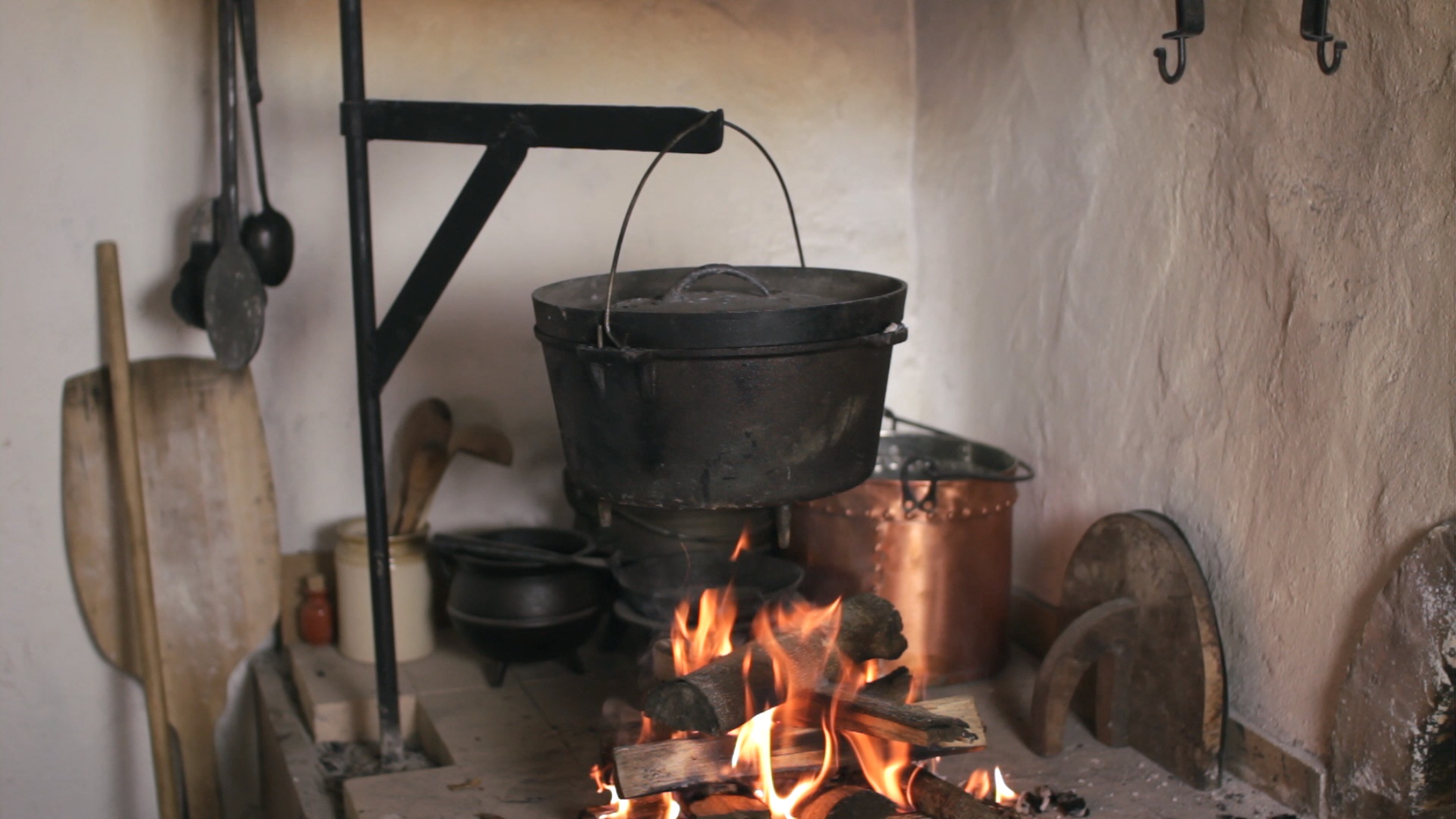
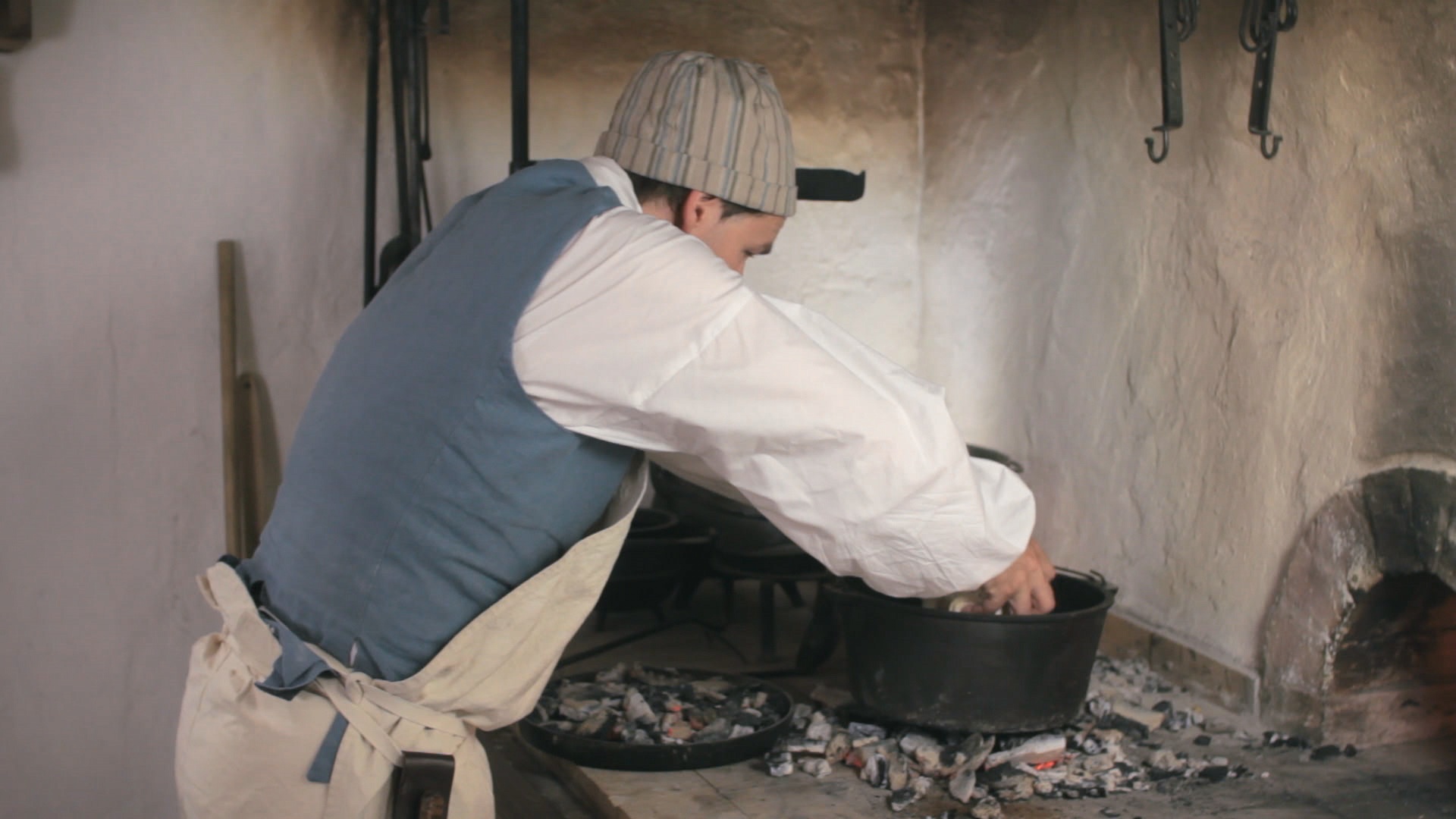
If you are preparing your bread on a hearth or campfire, preheat your Dutch oven over a fire, from which you will gather your embers for baking. Once you have sufficient embers, form a circle of embers on the ground or on the heart floor over which you’ll place your Dutch oven. Then cover the lid with additional embers.
Back to the dough…
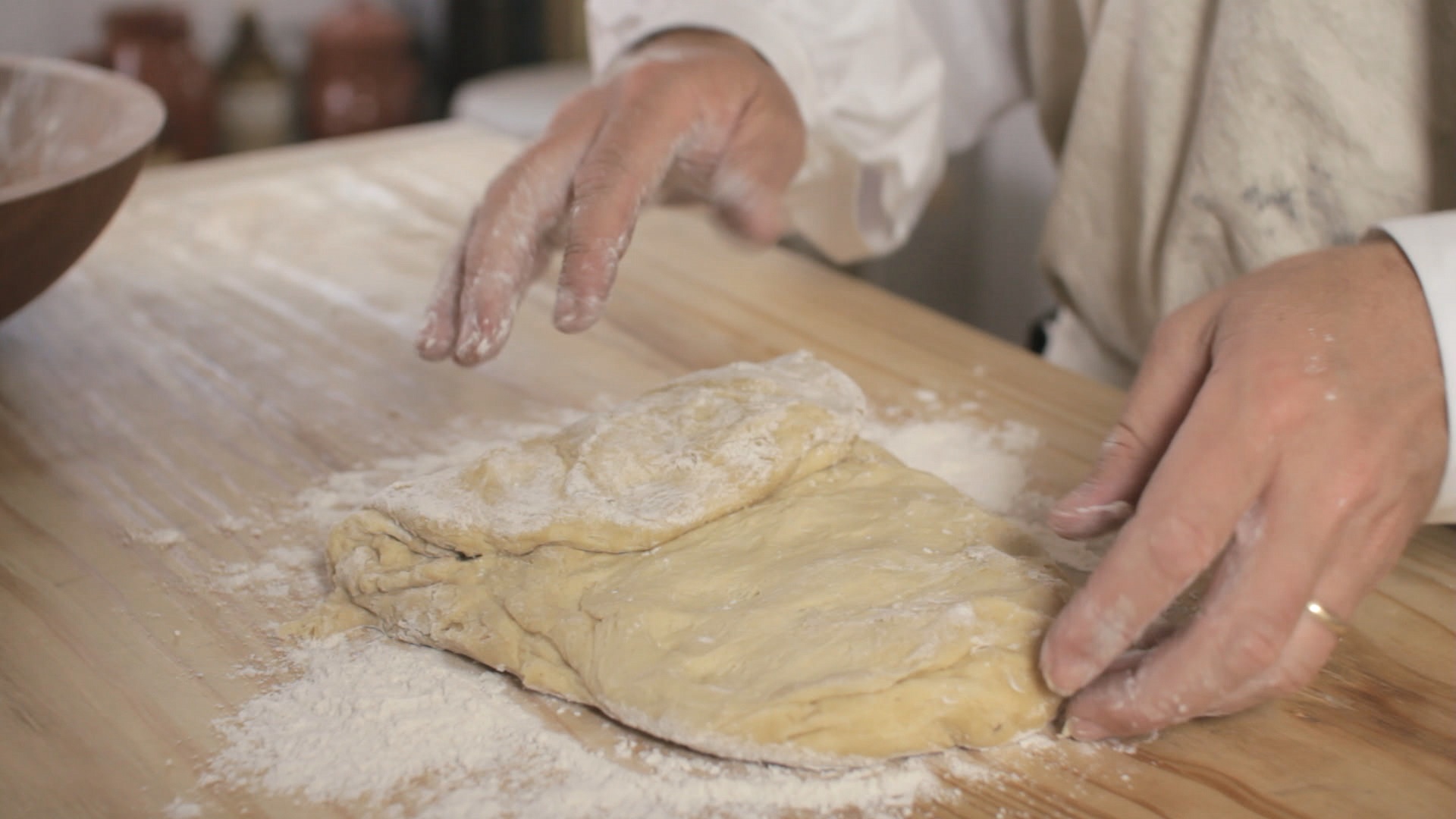
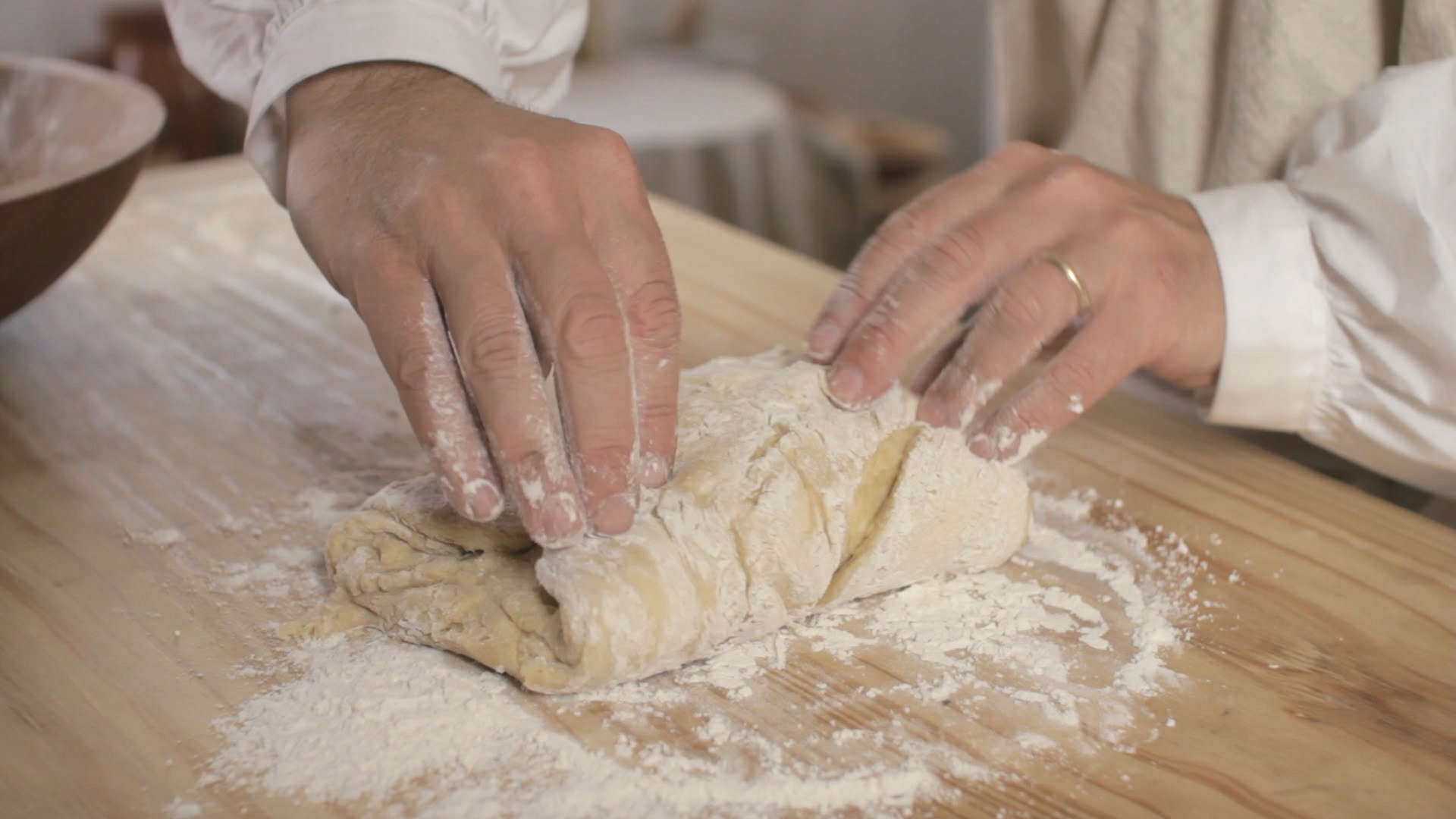
Turn it out onto a floured surface and with floured hands gently press it out into an oval or rough rectangular shape about 1 – 2″ thick.
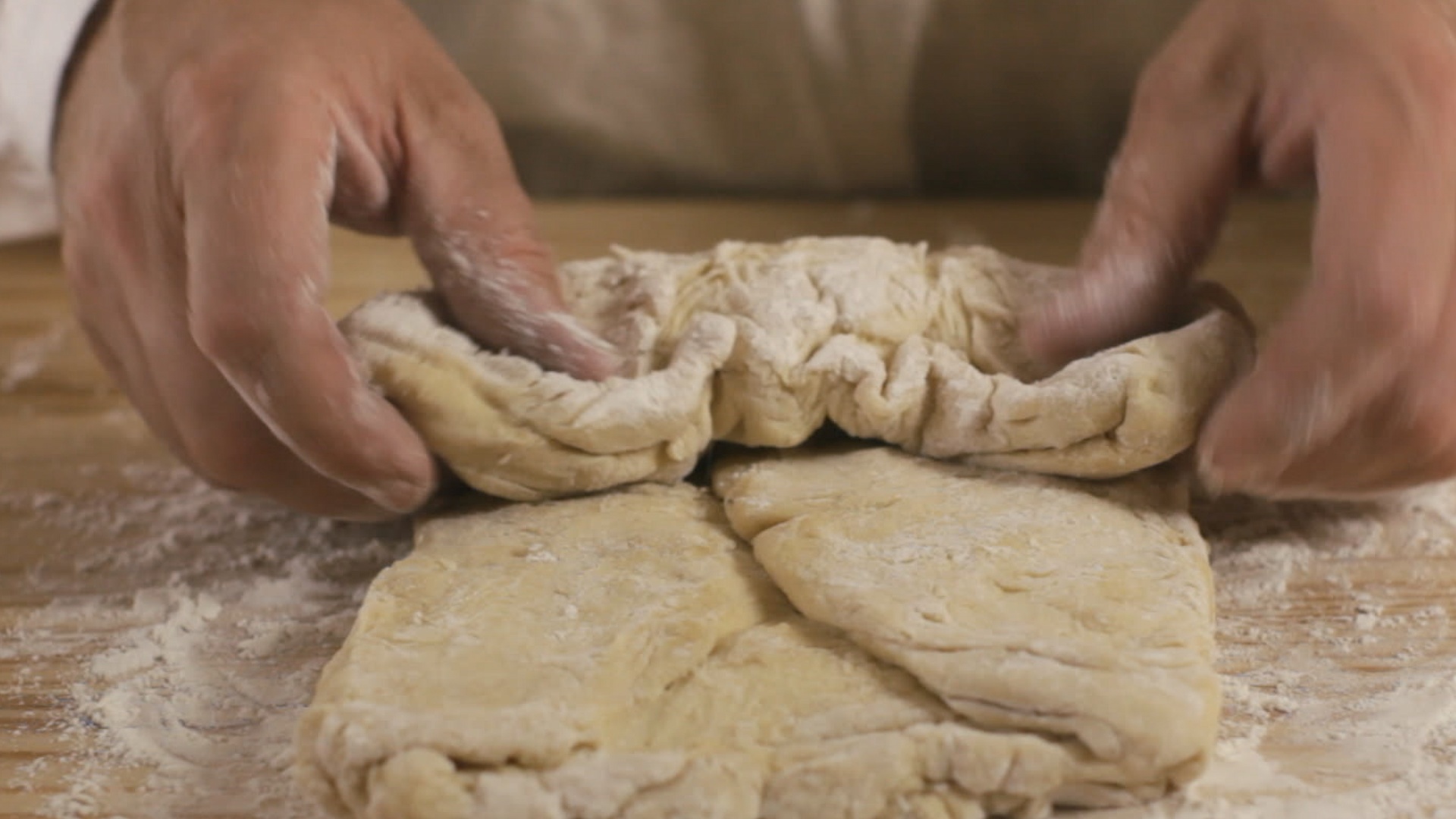
Choose one of the short ends and fold it over about 1/3 of the distance to the far edge, slightly stretching the dough as you lift up and fold.
Then fold over the opposite edge, again slightly stretching the dough as you go.
Repeat this process on the each adjacent side, stretching and folding.
Now place your folded loaf into your preheated Dutch oven and close the lid. If your baking over a embers, you’ll want to check to make sure they don’t go out during baking. Also, it works well to rotate your Dutch oven over your ring of embers every 5 minutes. This will ensure even heat distribution.
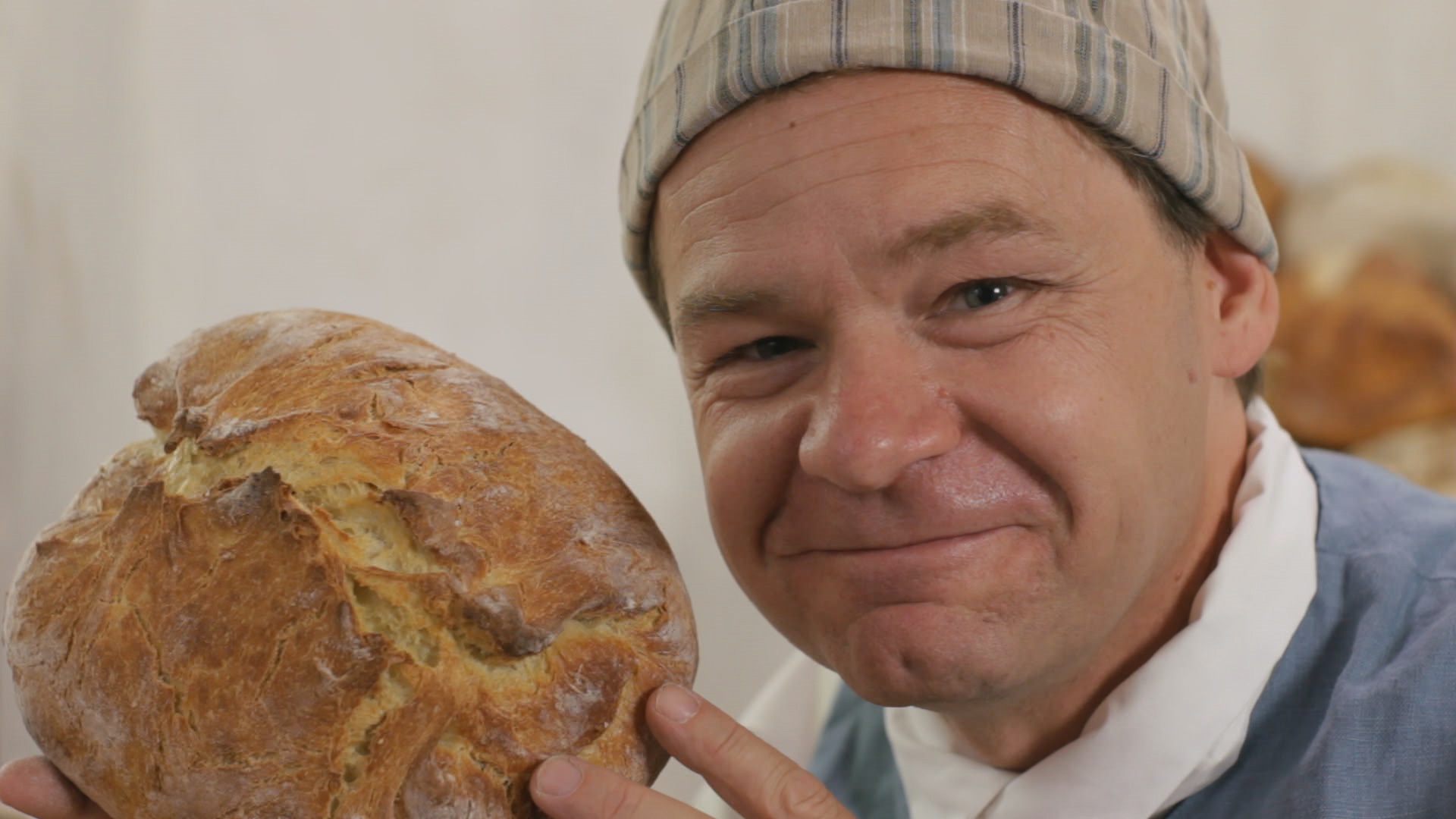
Bake your bread for 30 to 35 minutes. Other modern recipes for No-knead bread (baked in a conventional home oven) suggest taking the lid off your Dutch oven and baking for an additional 15 minutes. Our bread, however, is enriched with lots of fats and will brown without this additional exposure.
Again, if you’re doing this at home and you’re shooting for consistency, the internal temperature of your bread should reach between 190 and 200 degrees (F) before it is removed from the Dutch oven. You should allow the loaf to cool for an hour before grating, chipping, or slicing.
All of the original recipes called for a wood-fired oven, not a Dutch oven. Dutch ovens, however, were commonly used for baking bread in the 18th Century (We invite you to watch our video on the Dutch ovens offered here at Jas. Townsend & Son). The high moisture content of the dough, combined with the high temperature and enclosed baking environment of the Dutch oven results in a crispy crust. Baking this bread in a bread oven or conventional oven (minus the Dutch oven) will likely result in a softer crust, which is likely more accurate to the intentions of the original recipes.
One has to be careful about deciphering the old recipes when it comes to measuring ingredients. It’s often not as easy as pulling the calculator out of the bill drawer and doing some simple arithmetic. It’s a common mistake to assume that the kitchen nomenclature of the 18th century is the same we use today.
If you’ve earnestly searched through some of the old cookbooks, you’ve probably concluded the typical recipe presents more of a general idea or concept than it does a formula. In contrast, modern cookbooks are usually written to guarantee consistent results. The more fastidious TV chefs (and I’m not knocking any of them — I happen to be an Alton Brown fan) will weigh ingredients, e.g., flour, rather than use a measuring cup. The goal is reliability and consistency.
Speaking in general of our western society, we’ve come to expect consistency in our foods. This is not a bad thing necessarily. Large multi-billion dollar food corporations, however, lead the way as they built their brands around the idea that you can expect to eat the same burger whether you live in Old Town, Maine, or Eureka, California.
In many 18th century recipes, measurements were typically less than exacting: “a bit of this,” “two spoons of that,” “as much as will lie on the head of a groat,” “a piece of butter the size of an egg.” Is that a small, medium, large, extra large, or jumbo-size egg?
How big exactly is a turkey egg?
But even when quantities of ingredients were recorded by the old masters, if you endeavour to translate their formulas into modern equivalents, you’re likely going to need more than that calculator to figure out what the recipes actually mean.
We noticed this recently while working through some of the old bread recipes. Making bread was apparently not a casual affair in the 18th century. Some of the original recipes called for a peck or so of flour. Now, I don’t have my calculator handy at the moment, but running the numbers in my head, that’s over 30 cups. That would make close to a dozen loaves of bread. This makes sense, given the amount of work and firewood required to heat an earthen oven. Home bakers of the 18th century apparently baked enough bread for the entire week.
In other recipes, the word “gallon” was used as a measurement. Now this is a good example of how nomenclature has changed through the years. If you live in the United States, you expect a gallon to hold 128 ounces of liquid. It’s a measure that was officially adopted in the early 19th century from the old “wine” or “Queen Anne” gallon. It’s volume capacity precisely holds 231 cubic inches.
But the term “gallon” in the 18th century was likely the “ale gallon,” which had a capacity of approximately 277-1/4 cubic inches — approximately 20% larger than the wine gallon. The ale gallon held precisely 10-pounds of water at 62 degree (F). This measure later morphed into the “Imperial Gallon” that is still used in Great Britain and Canada.
In addition to the wine and ale gallon, there is the corn gallon. This measure is still occasionally used today to measure grain. In the 18th century, it was also used to measure flour and bread. It’s capacity is 268.8 cubic inches, or 16% greater than the wine gallon.
Now on one hand, such precise distinctions may seem to fly in the face of the more casual, less fussbudgety recipes of old. On the other hand, if you are looking for consistency and reliability, using nearly a fifth again of flour in a bread recipe, for instance, can make a big difference in the results.
It all goes to show that there are many considerations to be taken when interpreting the past, some of which we may be completely unaware.
A book we highly recommend is Martha Washington’s Booke of Cookery, “with historical notes and copious annotations,” transcribed by Karen Hess. Be sure to get Hess’s version. She does an excellent job of sorting through many of these interpretive issues. In addition, she shares her observations and opinions culled from her apparent countless hours of experimentation.
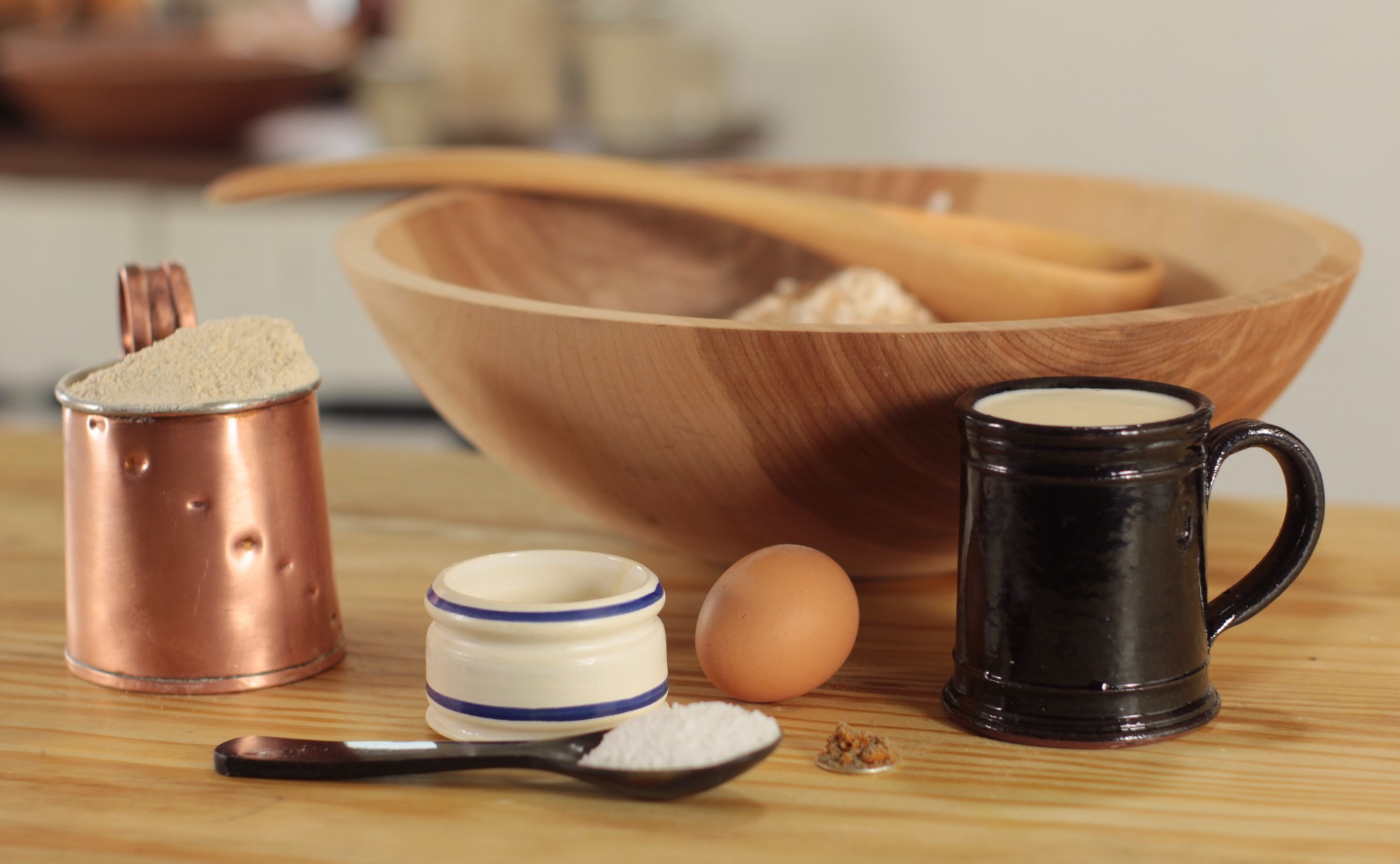
Jas. Townsend & Son offers a beautiful Copper Measuring Cup, handcrafted by our redsmith here in the U.S. It holds approximately 2 cups and is marked with dimples in 1/4-cup increments. We also frequently use our Blackjack Half-Pint Mug for measuring in our cooking videos. These are hand thrown by Master Potter Gary Nieter. Because they are handmade, they can vary slightly, but generally come close to holding 8 ounces (1 cup).
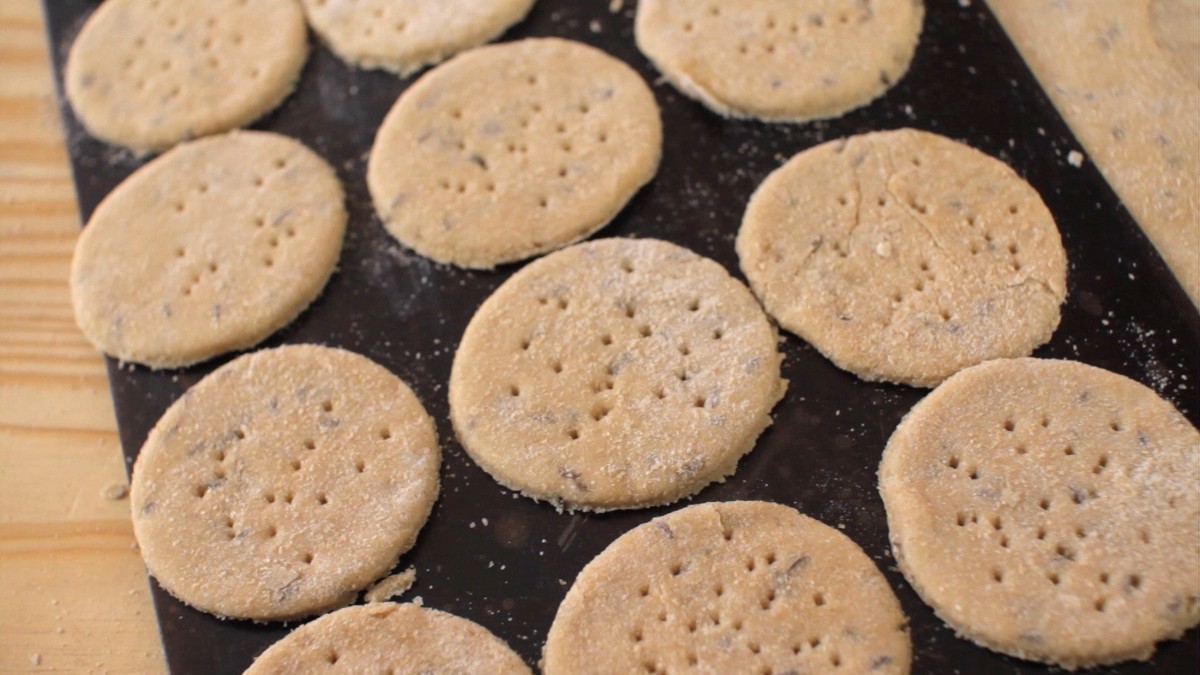
April of 2012 we did an episode on 18th century simple biscuits — a wonderful little snack that is somewhere between our modern day cookie and cracker.
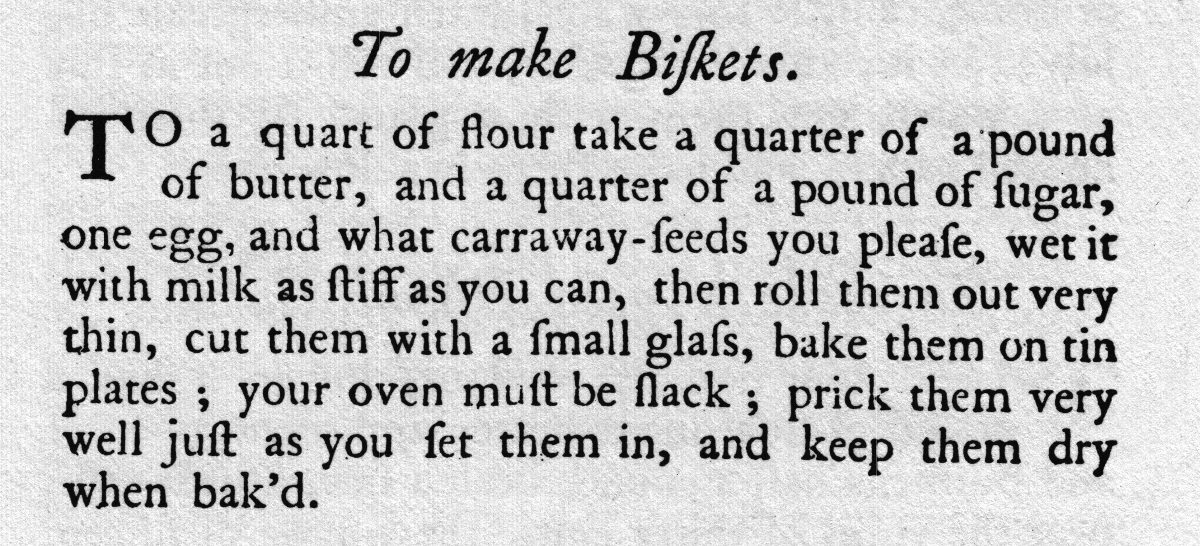
Here is the recipe from “The Compleat Housewife” by Eliza Smith 1758
Our modern interpretation:
4 Cups of Flour
1/2 Cup of sugar
1 Tablespoon of caraway seeds
1 Egg
4 oz of butter
approximately 2 Cups of milk
Take 4 cups of flour and add to that 1/2 cup of sugar. To that add the caraway seeds. In a different bowl whisk the egg, and add that to the melted, but not hot, butter. Stir the wet and dry ingredients together, and slowly add enough milk until a stiff paste is formed. Roll out on a floured surface to about 1/8″ thick. Cut out shapes as you please and place on greased baking tin. Prick before placing in oven to keep the biscuits from puffing up. Bake at 275 degrees (F) for about 10 minutes.
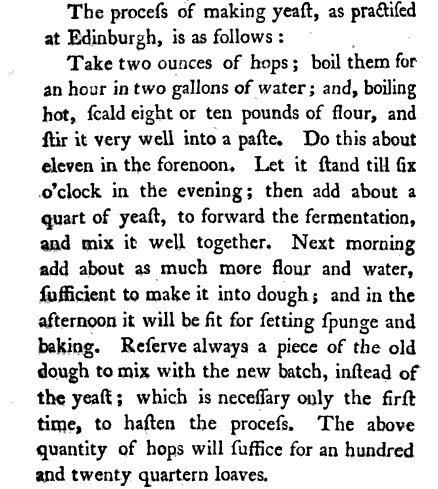
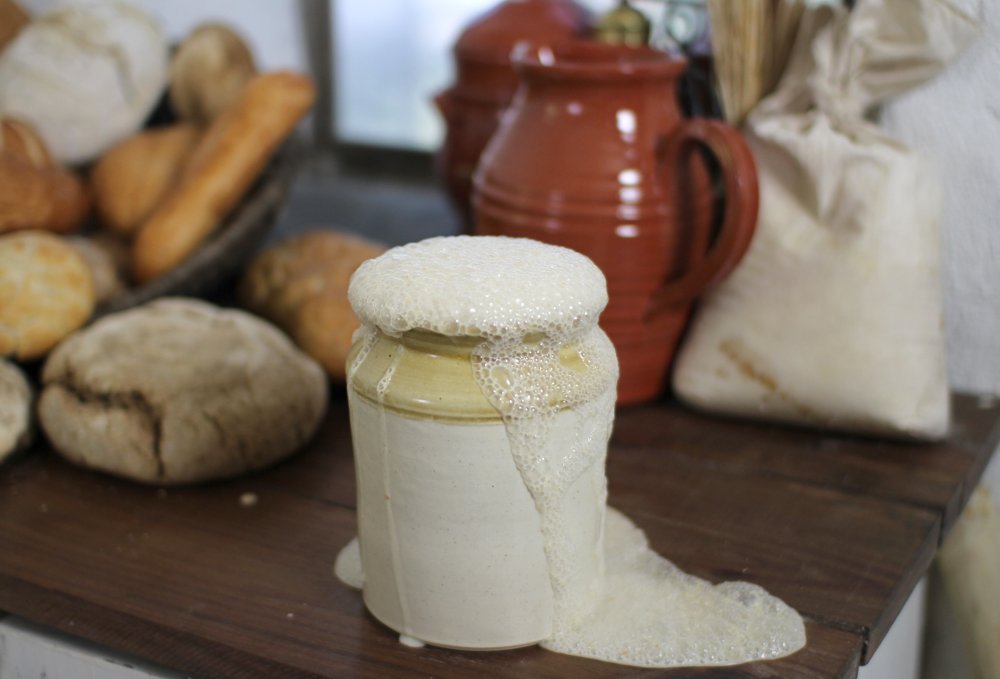
Here is one of the examples of making yeast in the 18th century where they prepare a batch of flour with some boiled hops, then a small batch of barm is added which turns into a large batch of leaven. And note the saving of a piece of “old dough” for the next baking.
The process of making yeast as practised at Edinburgh is as follows: Take two ounces of hops boil them for an hour in two gallons of water and boiling hot scald eight or ten pounds of flour and stir it very well into a paste. Do this about eleven in the forenoon. Let it stand till fix o clock in the evening then add about a quart of yeast to forward the fermentation and mix it well together. Next morning add about as much more flour and water sufficient to make it into dough and in the afternoon it will be sit for setting spunge and baking. Reserve always a piece of the old dough to mix with the new batch instead of the yeast which is necessary only the first time to hasten the process The above quantity of hops will suffice for an hundred and twenty quartern loaves.
Buttermilk in the 18th century was different from what is typically available in grocery stores today. It was the dairy by-product left over from the churning of butter. The terms “buttermilk” and “whey” were interchangeably in many texts and period dictionaries.
Today’s buttermilk is typically milk inoculated with a lactic-acid bacteria. It has a thick viscosity and a tart flavor. The same bacteria exists naturally in traditional buttermilk, giving it a tart flavor as well. Traditional buttermilk, however, is usually much thinner than modern cultured buttermilks. The lactic acid in both traditional and cultured buttermilk makes both ideal reacting agents for such chemical leavens as Baking Soda and Baking Powder. That is why many pancake, biscuit, and soda bread recipes utilise buttermilk. But chemical leavening wasn’t in popular use until the very late 18th century, and more like the early 19th century, so buttermilk would not have been used in baking for that purpose in the 1700s.
Very few references exist in the original cookbooks regarding the use of buttermilk. The “Dictionaire Oeconomique” by Noel Chomel (1725, London) suggests that buttermilk should not be discarded, but rather, it should be given to the poor.
William Ellis mentions in “The Country Housewife Family Companion” (1750, London) that some bakers would use buttermilk in place of water or milk in the baking of bread dough. This is of particular interest, as one strain of lactic-acid bacteria (Lactobacillus) that is sometimes present in buttermilk is the same genus of bacteria that is cultivated to produce sourdough bread.
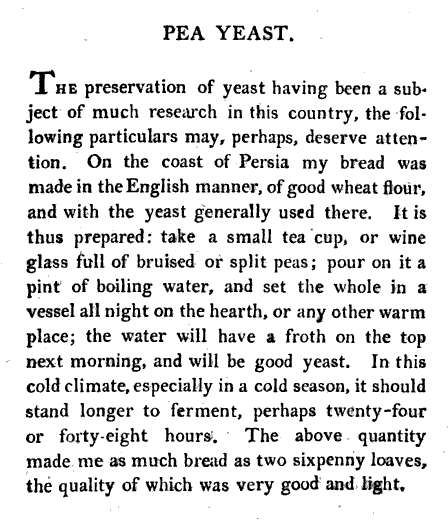
In our 18th Century cooking episode on “Which Yeast” we mentioned several instances of wild yeast cultivation in the late 18th century. Here is one dating from 1800. Notice that the author needs to explain this process as if it were not already known to the readers and it origin is Persia.
PEA YEAST
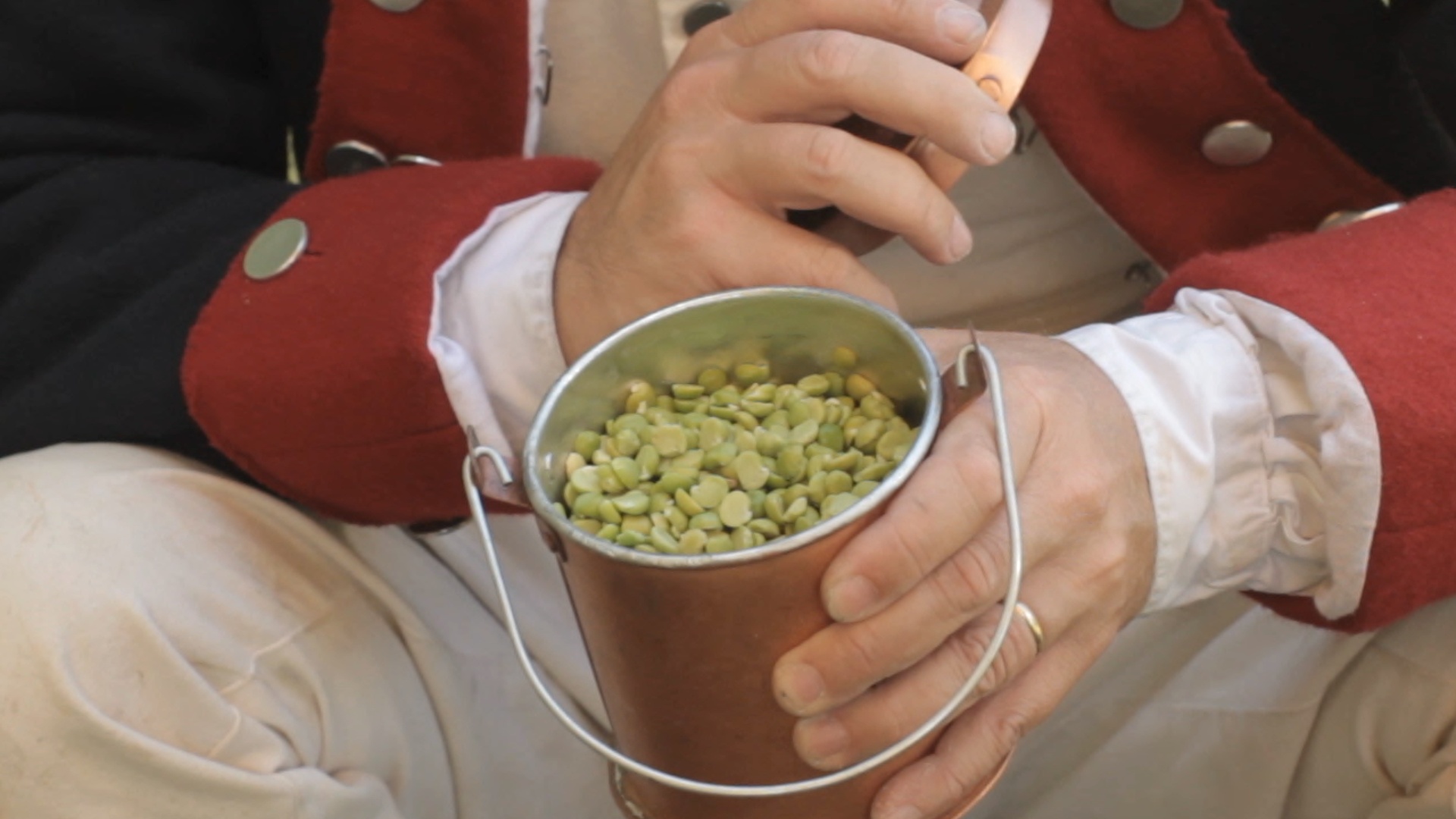
The preservation of yeast having been a subject of much research in this country the following particulars may perhaps deserve attention. On the coast of Persia my bread was made in the English manner of good wheat flour and with the yeast generally used there. It is thus prepared take a small tea cup or wine glass full of bruised or split peas pour on it a pint of boiling water and set the whole in a vessel all night on the hearth or any other warm place the water will have a froth on the top next morning and will be good yeast. In this cold climate especially in a cold season it should stand longer to ferment perhaps twenty four or forty eight hours. The above quantity made me as much bread as two sixpenny loaves the quality of which was very good and light
from the “ANNALS of AGRICULTURE and OTHER USEFUL ARTS”, 1800
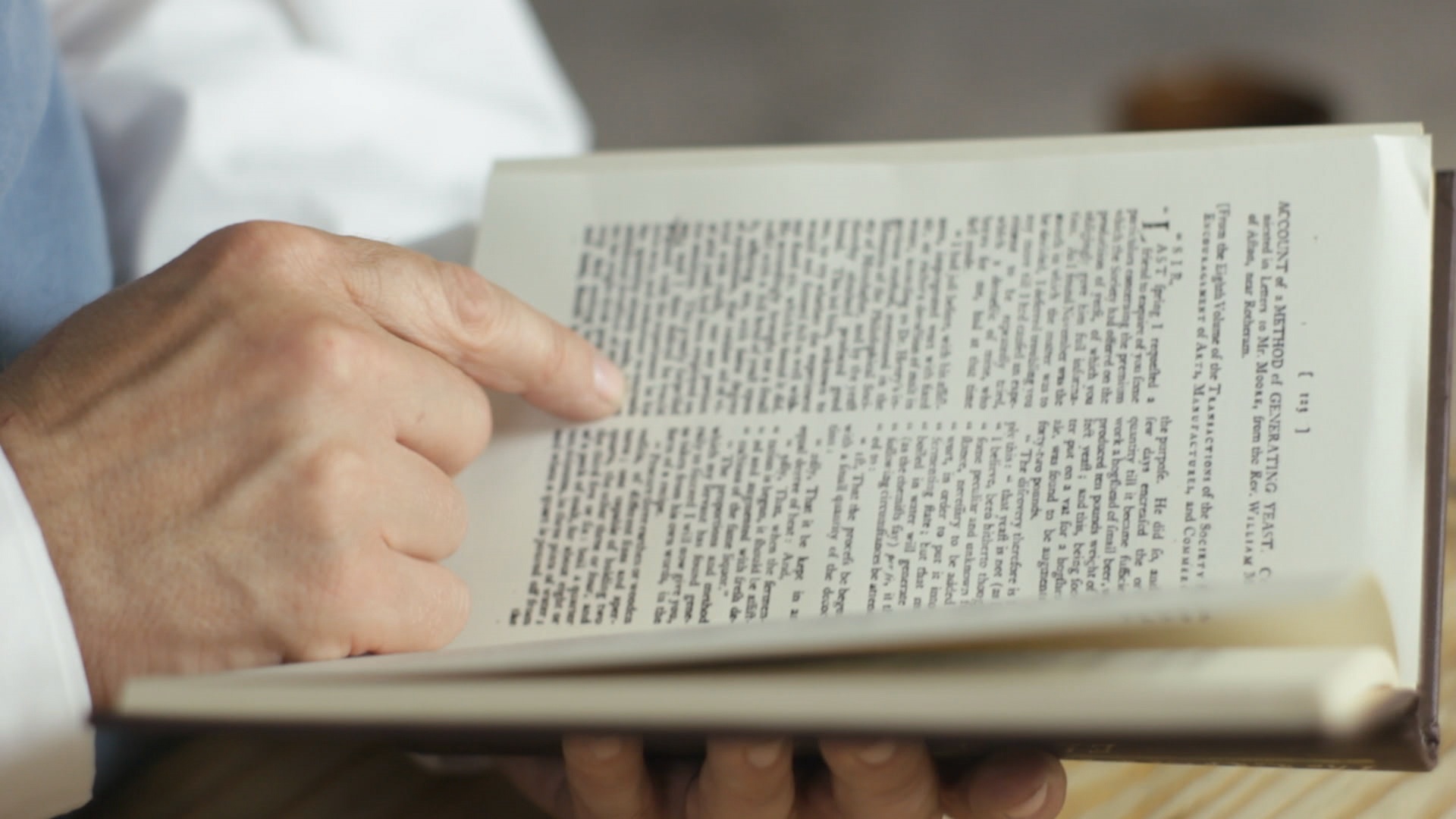
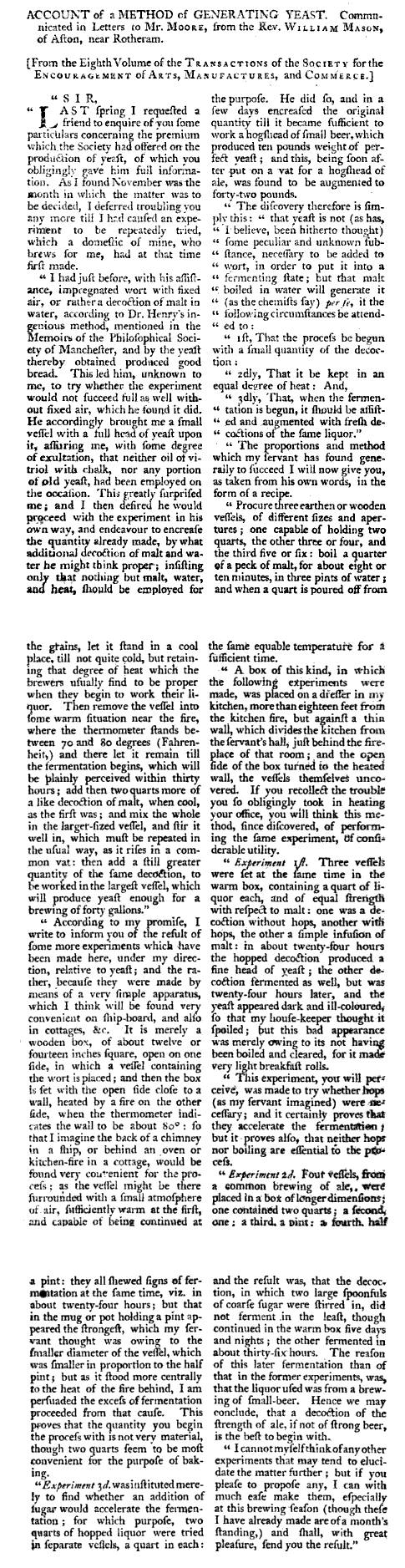
Here is the complete text of the reference I mentioned in the video. As you can see from the text. Most of the western Europeans thought that the bubbling action on the yeast has something to do with fire, or heat.
From the Eighth Volume of the Transactions of the Society for the Encouragement of Arts Manufactures and Commerce. 1790
Welcome to our blog, SavoringthePast.net. The purpose of this blog is to open dialog with readers and to share insights regarding the history of food.
Food is a universal connection between people of differing cultures, locations, and ages. It’s easy to take for granted the foods we regularly enjoy, giving little thought to the origins of our favorite dishes or how they may have impacted history or evolved over time. The dinner table has always been a place for friends to gather to exchange ideas and engage in dialog ever since…well…ever since there were dinner tables.
While producing our video series called “18th Century Cooking with Jas. Townsend & Son,” we quickly realized there was simply too much interesting food history and information to share in our 10-minute productions. So we’ve started SavoringThePast.net as a means to share authentic recipes, foodie history, and all of the details we found most interesting from our research and experimentation. We invite you to join us at the table as we savor the flavors and aromas of centuries past.
By the way, if you’re unfamiliar with our video presentations, you can watch them on our channel at Youtube.com/jastownsendandson.













 Savoring the Past