This recipe is from Martha Washington’s Booke of Cookery and Booke of Sweetmeats transcribed by Karen Hess.
The original recipe reads:
Cut ye trout in pieces, then boyle it in white wine, sum butter, as much salt as will season it, & a little rosemary, some grated or slyced ginger. when it is boyled, serve it up with sops layd in ye bottom and sydes of ye dish.
Our translation:
We made a sauce of white wine and butter at a ratio of 1/3 butter and 2/3 wine. Add a bit of salt and ginger. Heat the sauce up to boiling in a heavy sauce pan, As soon as it bubbles remove from heat and place your trout fillets in the sauce. Submerge or spoon the sauce over the fish to cook. Serve on toast bread pieces.
1 Pint Milk
4 Oz Vermicelli
Ground Cinnamon to taste
1 Cup Heavy Cream
4 Oz Melted Butter
4 Oz Sugar
4 Egg Yolks Well Beaten
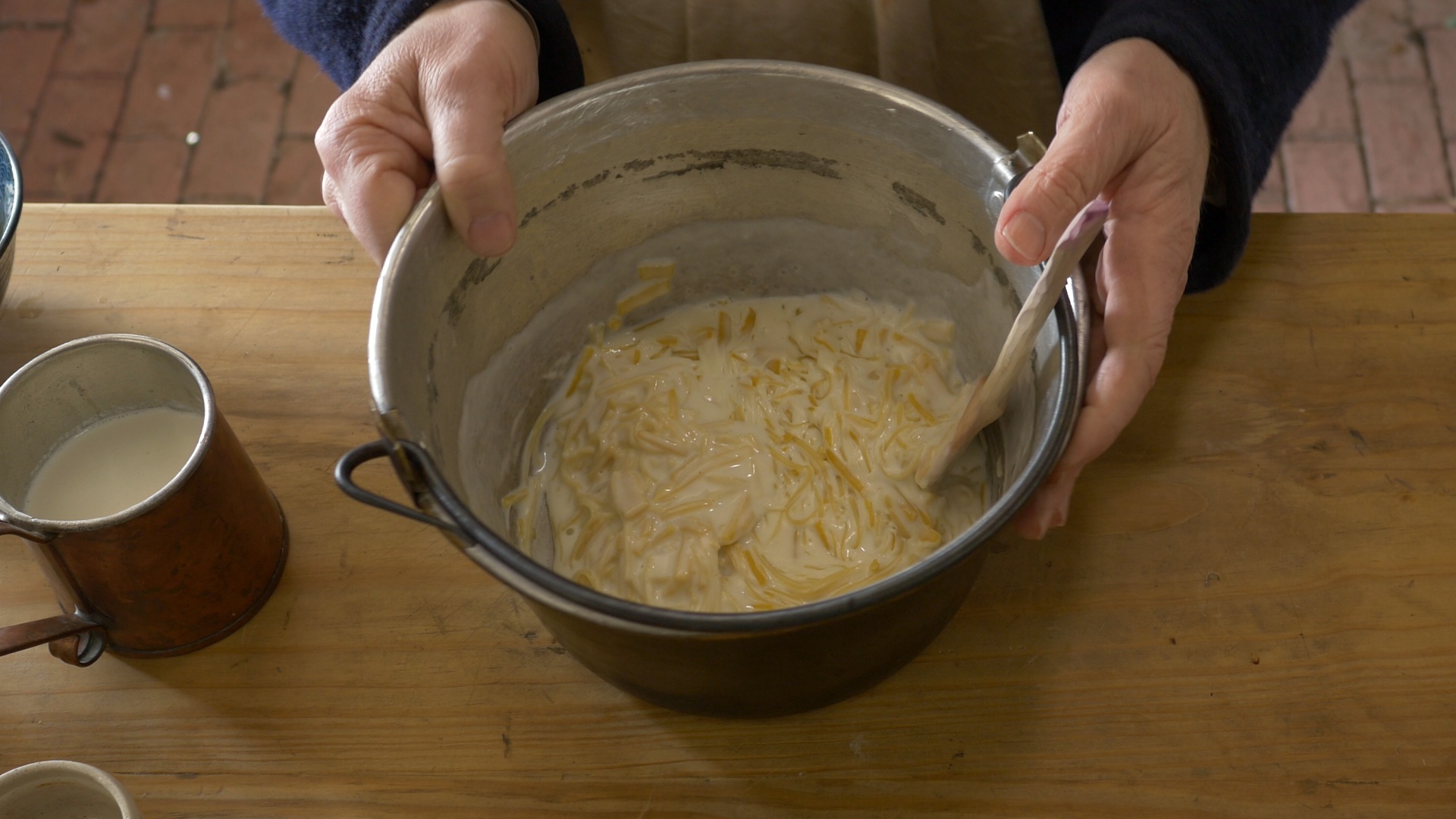
Boil Vermicelli in the milk, making sure to stir constantly until the vermicelli is soft.
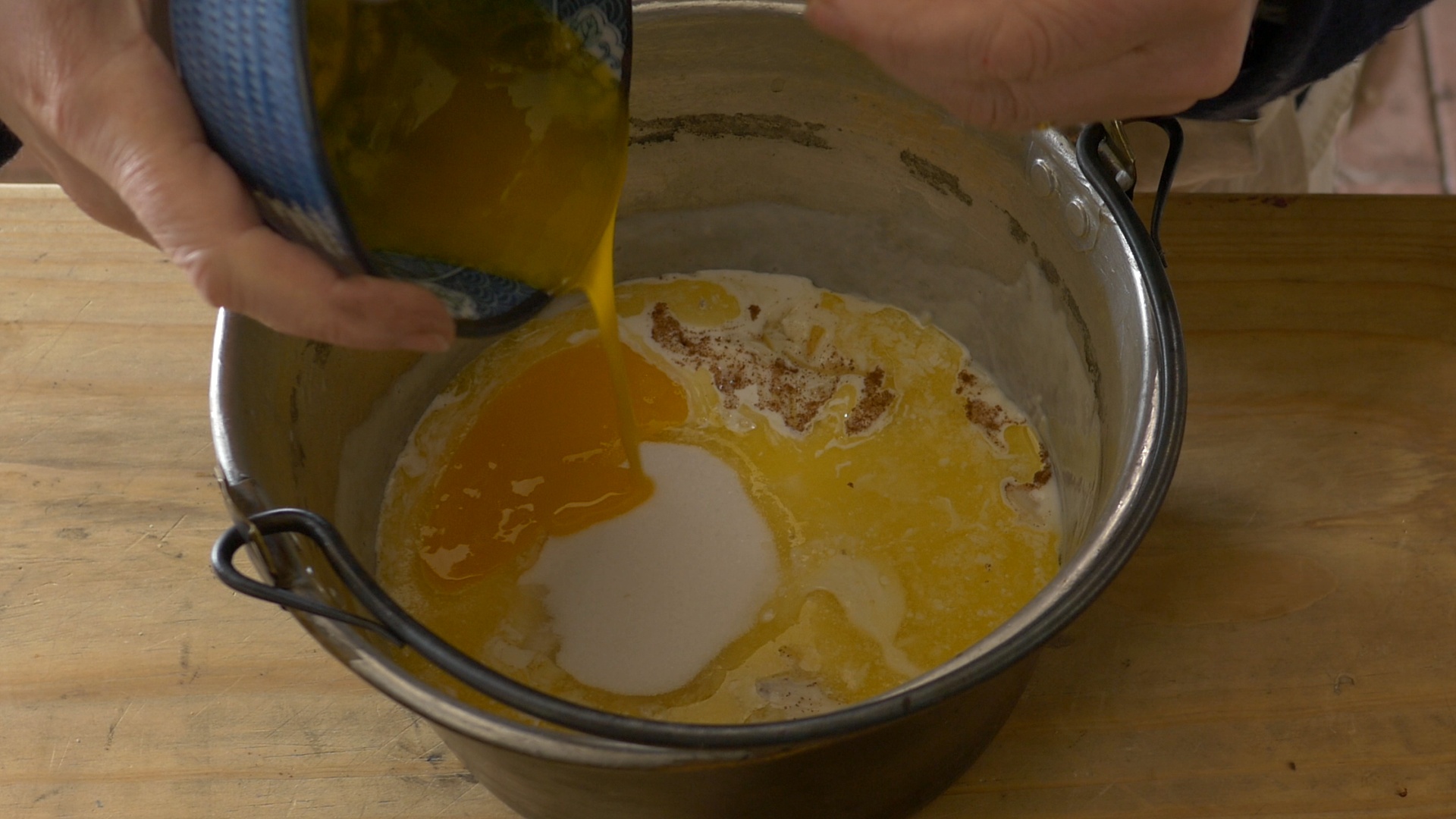
Add in Cinnamon, heavy cream, butter, sugar, and egg yolks. Stir well.
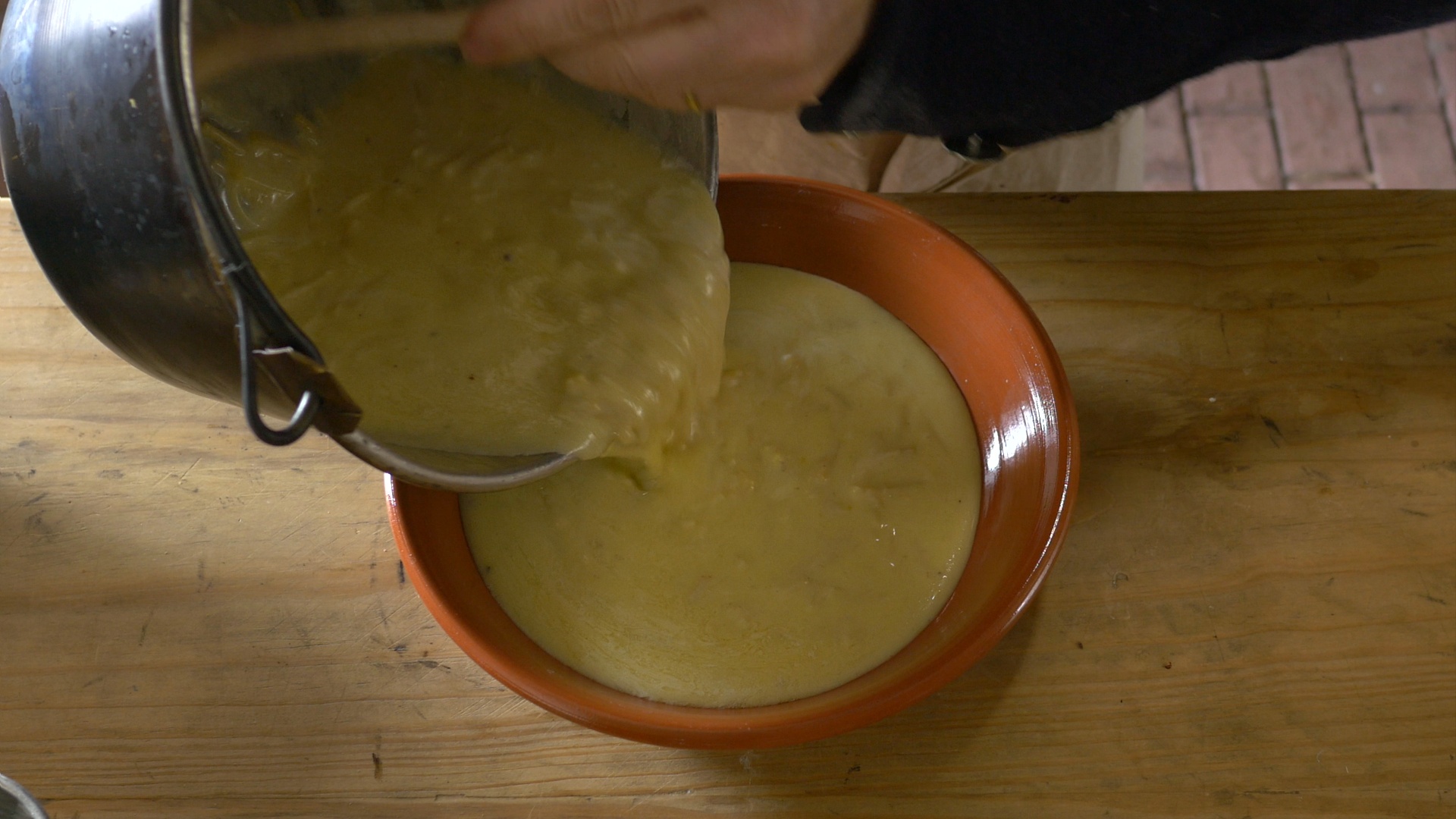
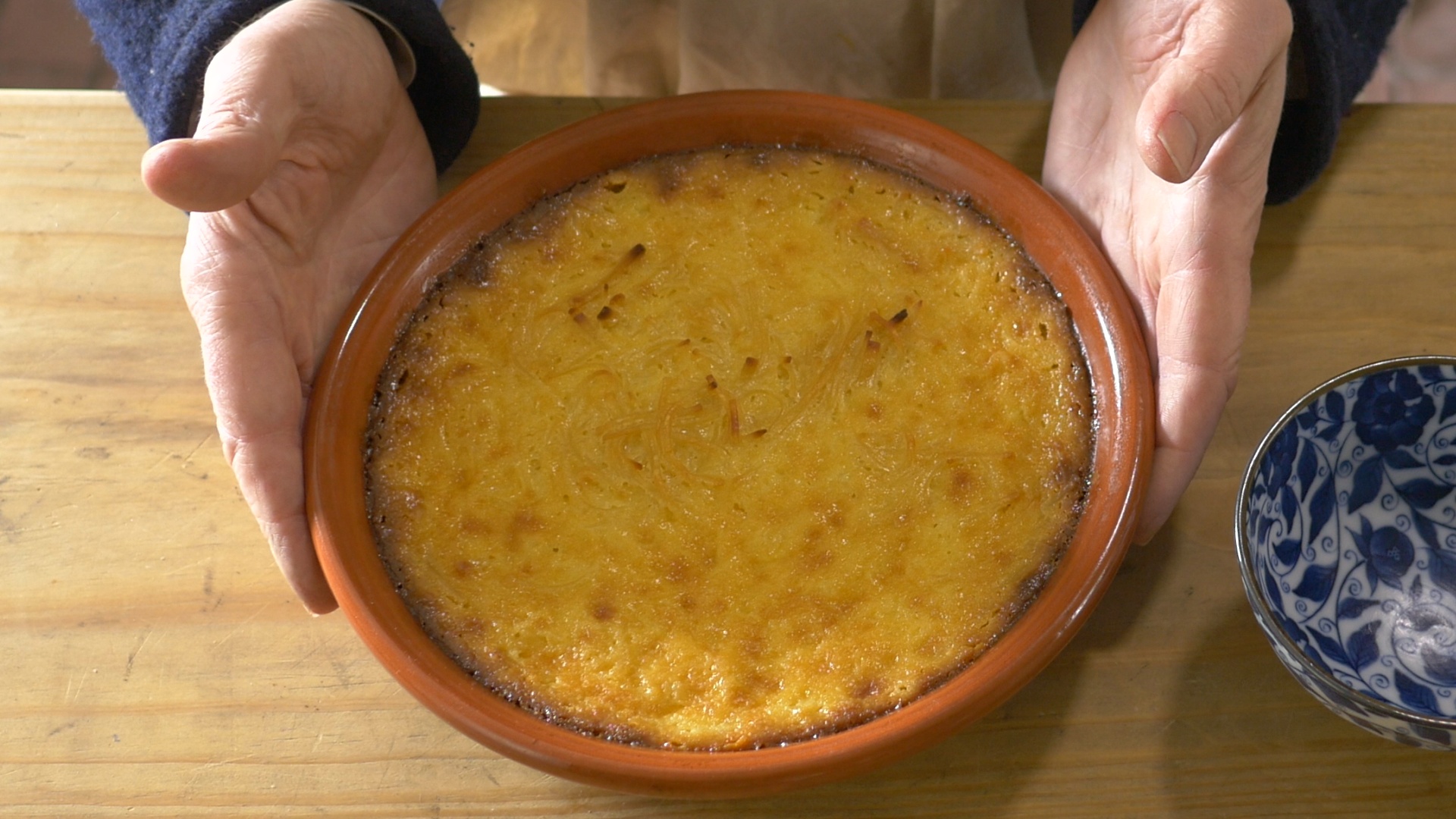
Pour straight into pie pan, leaving enough room at the top for expansion during cooking.
Life on the trail in the 18th century was often a difficult and dangerous endeavor. It’s easy to romanticize from our overstuffed chairs what wilderness living may have been like — being one with nature, living in a symbiotic relationship with the land. In reality, however, even for the expert leather-skinned woodsman, it was more likely an unrelenting struggle for one’s own survival.
Maintaining the most basic food supply was of utmost importance to the trekker, as the trail was an intolerant host. Traveling, especially over long distances, required planning ahead. The only meal one could count on was the meal he packed in. You could only hope for additional opportunities while nature wasn’t looking.
But that’s not to say that on occasion nature eases her grip, and the supply to be found is of the delicious sort — even by modern “civilized” standards. One such instance can be found in the annals of the great 18th century explorer, Captain James Cook.
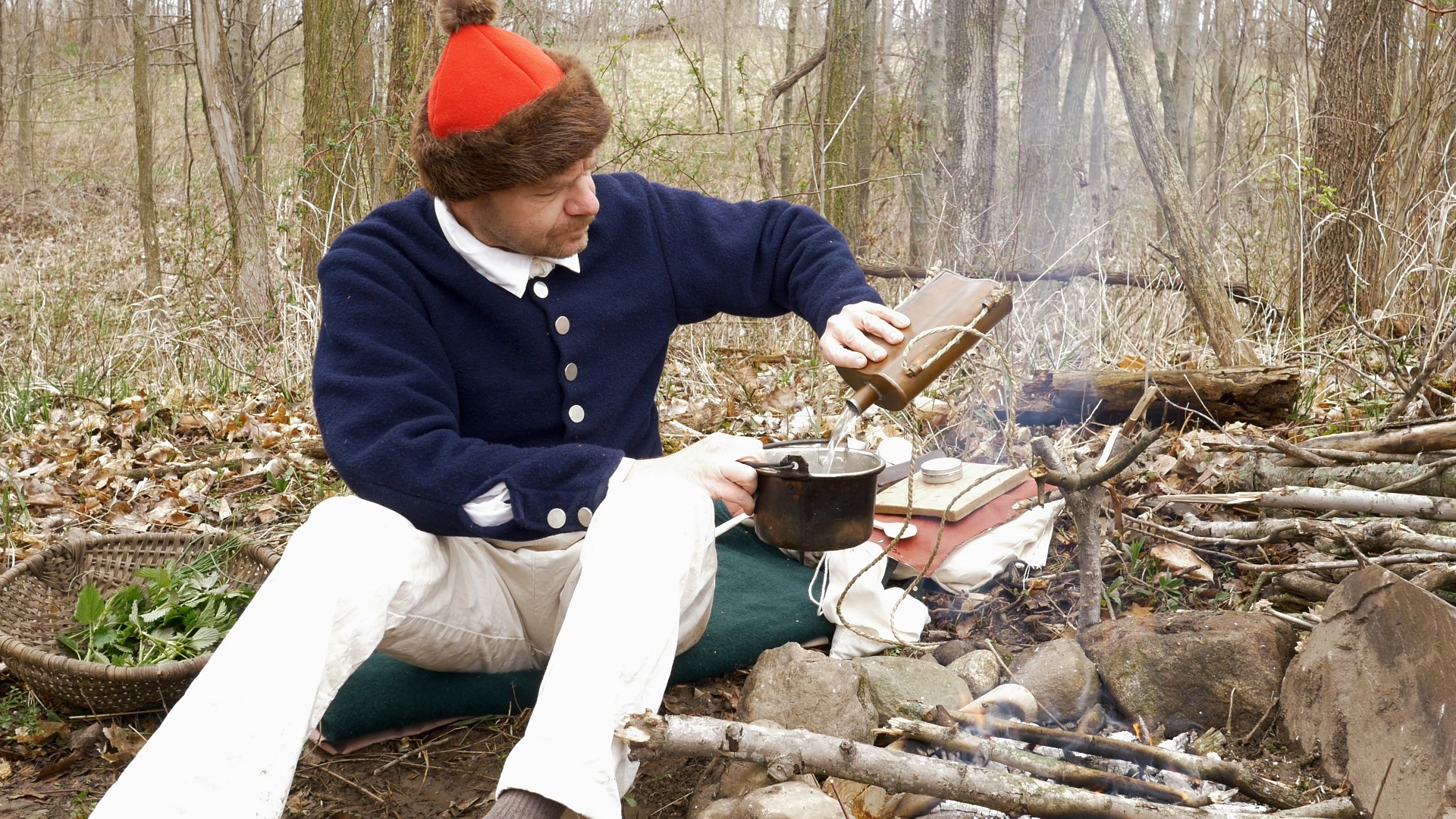
It was this passage that prompted Jon to try a springtime soup made from a few of the same essentials often carried by trekkers, and supplemented with what nature offered up.
Jon mentions a number of ingredients that he had prepared earlier. For these recipes check the videos out below:
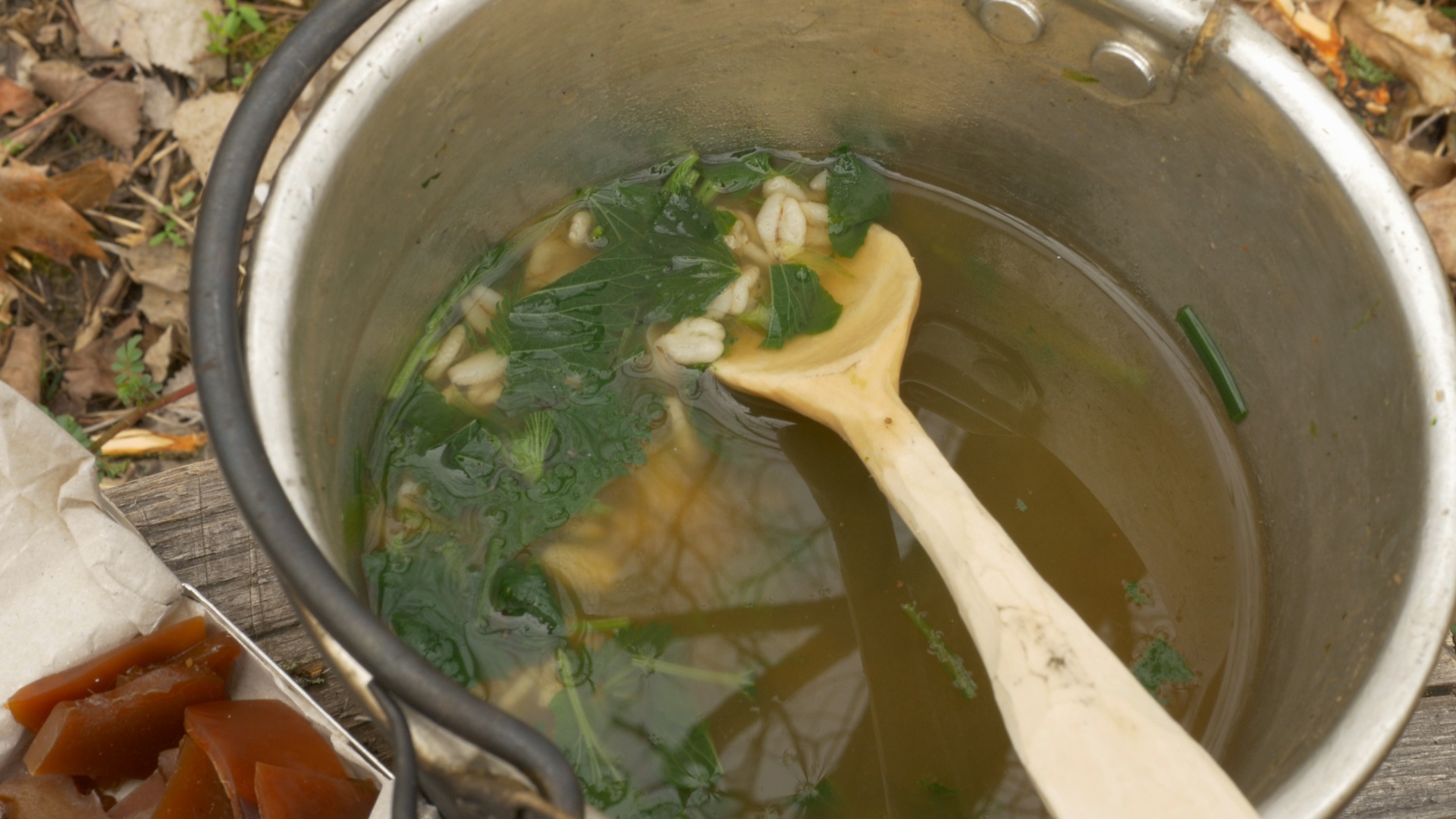
Soup with Wild Greens
Ingredients
1 quart of water
2/3 cup of barley
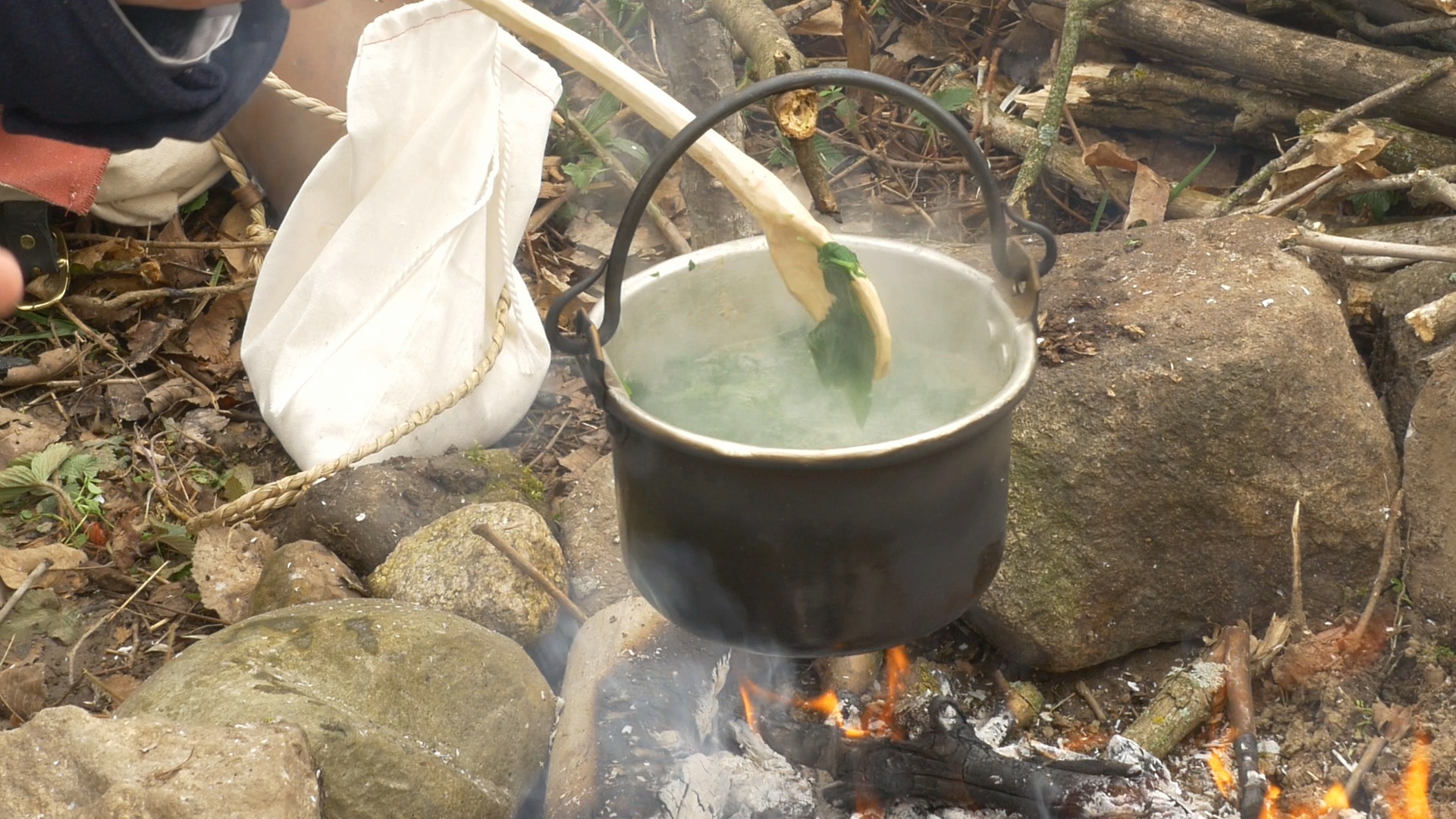
1 handfull stinging nettles chopped
1 handful wild garlic green stems chopped
3-4 wild garlic bulbs sliced
3-4 leaves of garlic mustard
1 handful dandelion greens
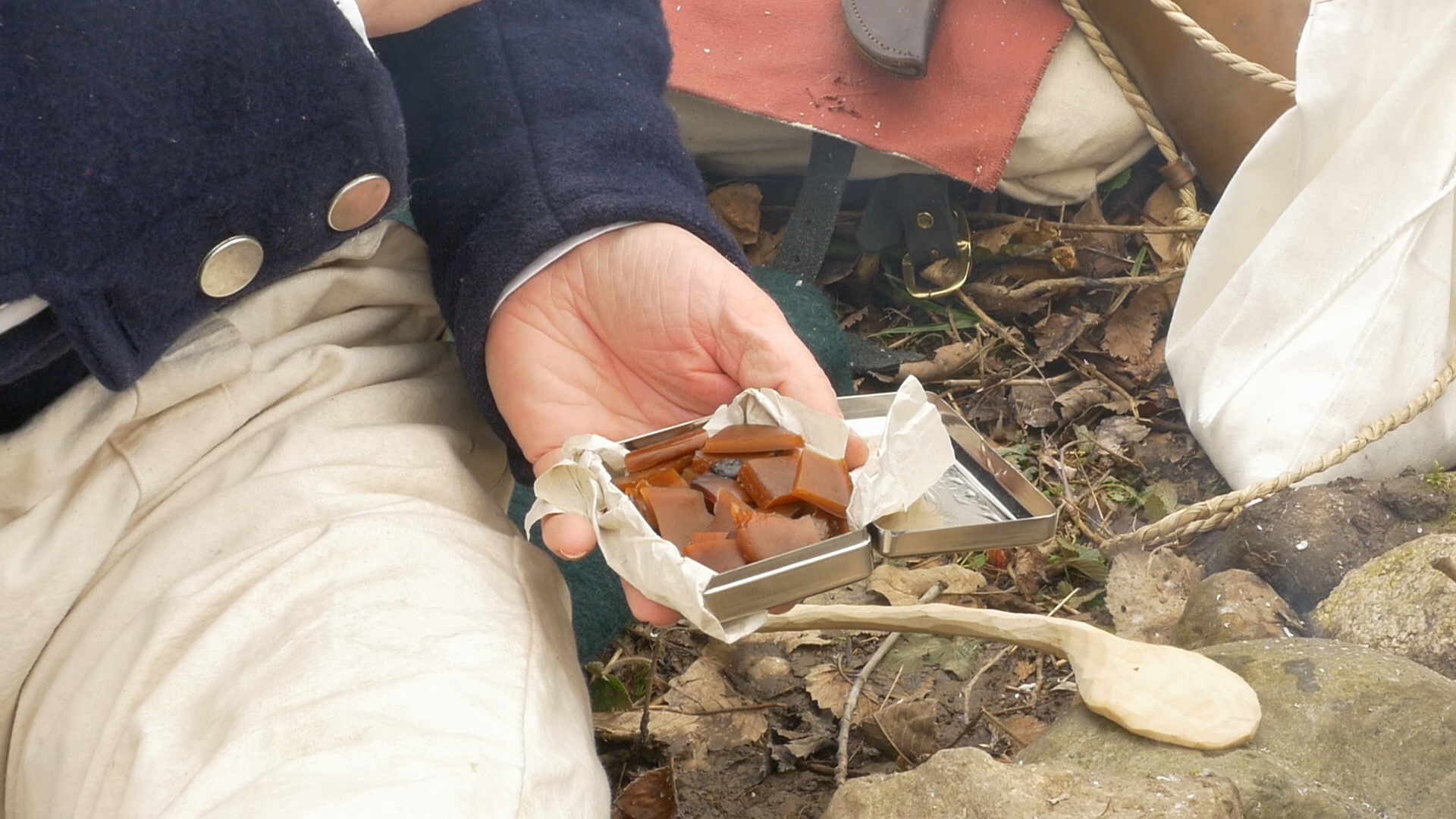
3 medium size pieces of portable soup (about 1-1/2 inch size pieces)
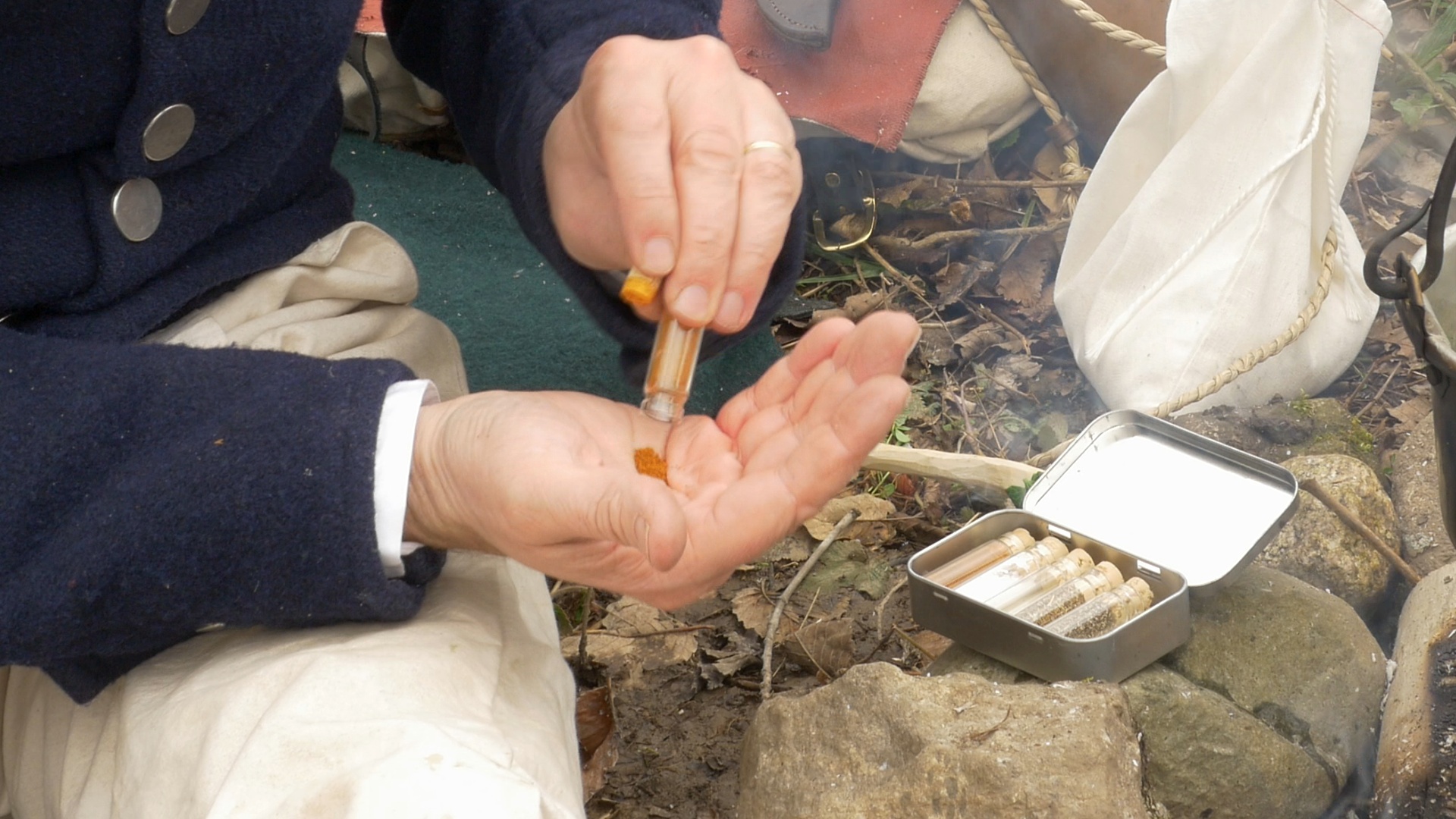
2 large pinches of Mushroom ketchup powder
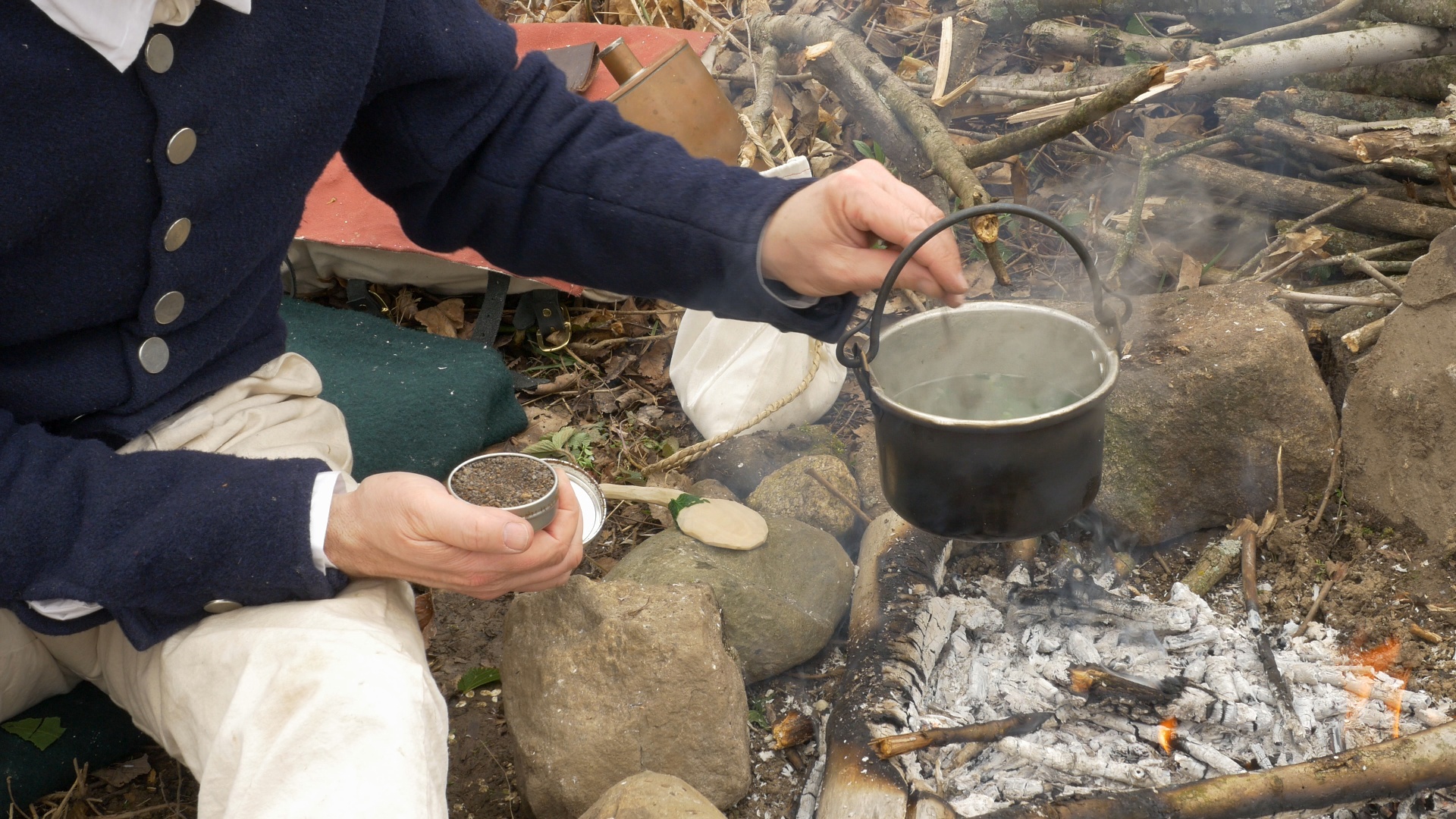
1 pinch Salt, 1 pinch Pepper, and 1 pinch Cayenne all from Jon’s Pocket Spice Box
Directions
Pour the water and barley in a small sized pot and set it over your campfire.
After about an hour, add in the wild greens.
Finally stir in the portable soup. The pot will need to be removed from heat immediately after the portable soup is dissolved, so make sure to pay extra attention to this stage.
Once it has cooled a bit, season the soup to your liking. Jon adds powder he made from leftovers of a mushroom ketchup (which is flavorful enough to fully substitute portable soup for a vegetarian version).
Next add salt, pepper, and cayenne.
For some extra thickness enjoy this soup with Ship’s Biscuits.
This soup encapsulates a timeless tradition as beloved in the 18th century as it is today. Jon hits the nail on the head when he says that “there is nothing like cooking your meal out over an open fire like this with greens that you just gathered”.
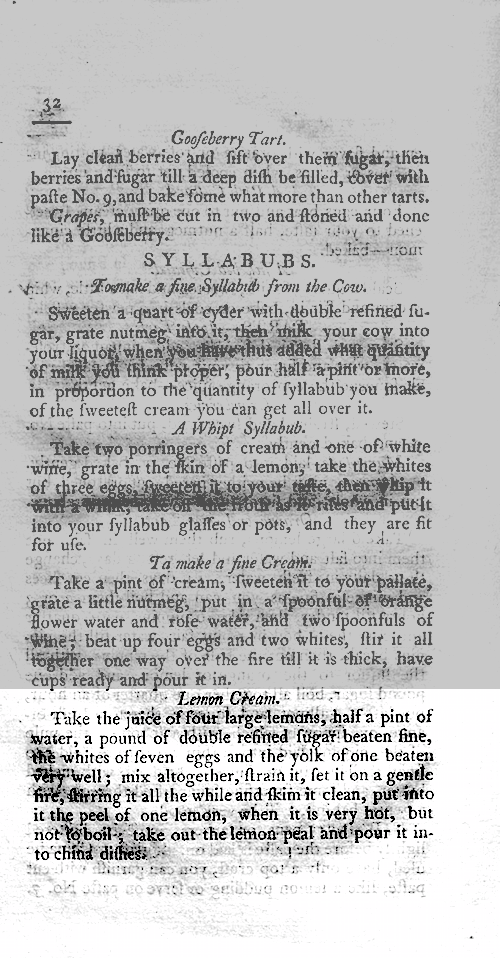
Don’t be fooled by the word “cream.” This delicious recipe for Lemon Cream from Amelia Simmons’ cookbook American Cookery (1796), is ironically completely dairy-free. Instead, it uses an interesting egg-cooking technique which yields a delicious custard-like dessert. While fruit creams of this nature have over time fallen off most modern culinary menus, lemon cream is one of the few survivors. It’s most recognizable today in the form of lemon cream pie.
This is a very easy recipe. Be sure to use only fresh lemon juice!
Lemon Cream
Ingredients
6 egg whites
1 whole egg
the juice of 4 lemons (about 1 cup)
1 cup of water
2 cups of sugar
the rind of one lemon
Directions
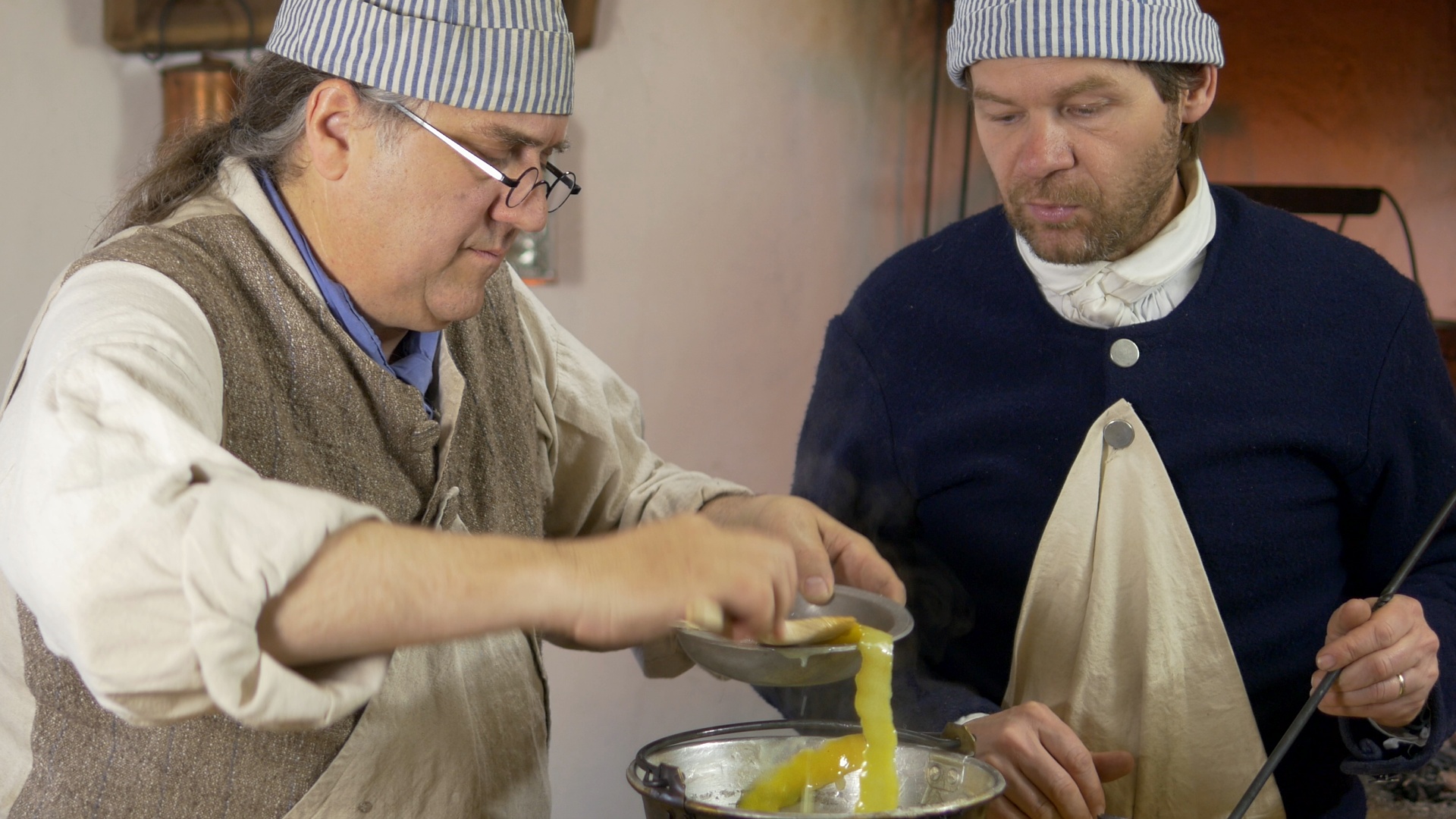
Mix together the egg whites, egg, lemon juice, and water.
Whisk in the sugar until it’s completely dissolved.
Pour the mixture through a sieve to strain off any egg treadles.
Put the whole mixture in a pot with the lemon rind, and place it over medium-low heat.
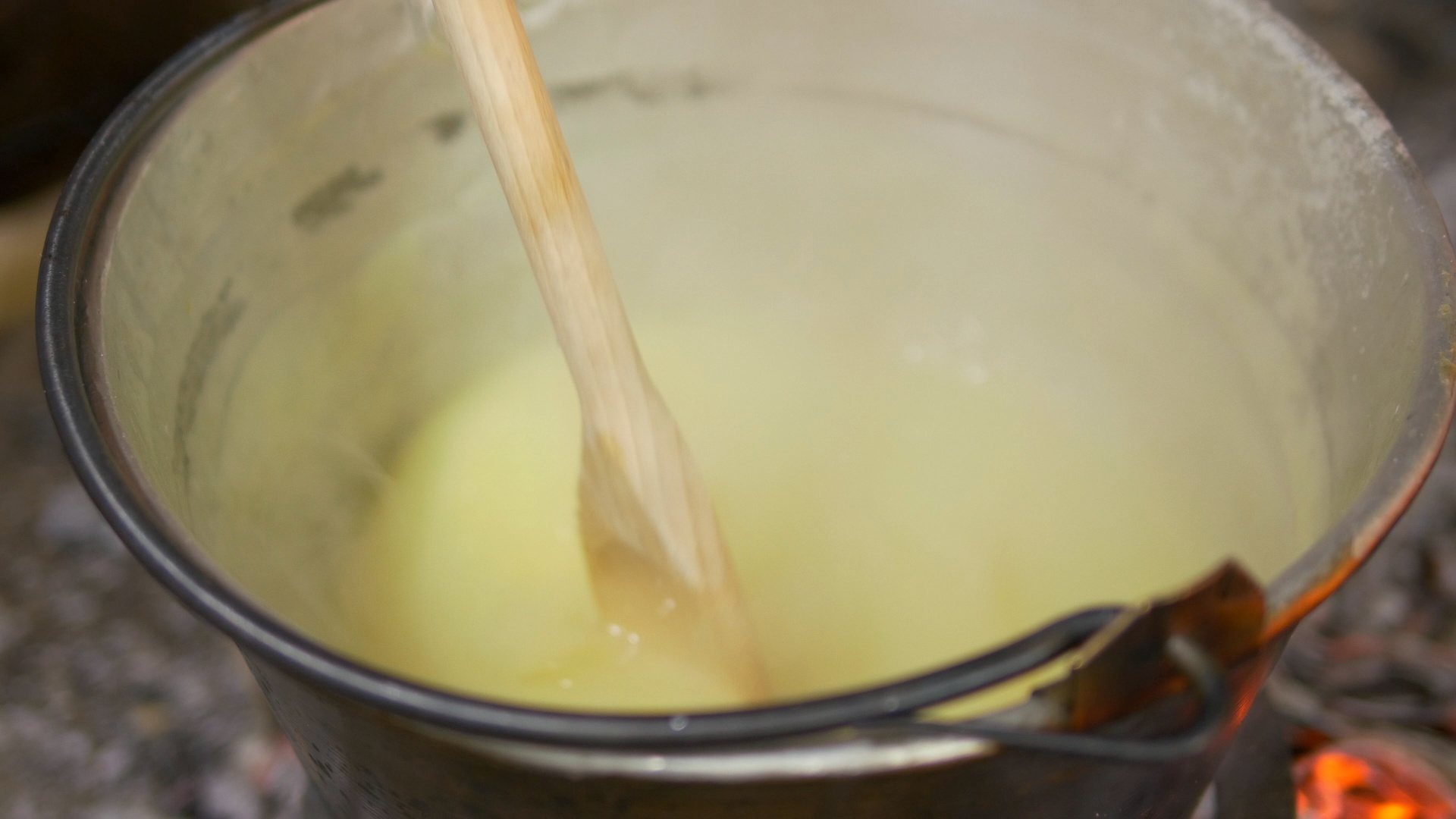
Stirring constantly, slowly bring the mixture up to a simmer — just under boiling. If any foam or scum forms, remove it.
The mixture will remain very liquid as it heats up. It’s very important that you stir the mixture continuously. Immediately prior to boiling, the mixture will suddenly and noticeably thicken. When this happens, immediately remove it from the heat.
Remove the lemon rind.
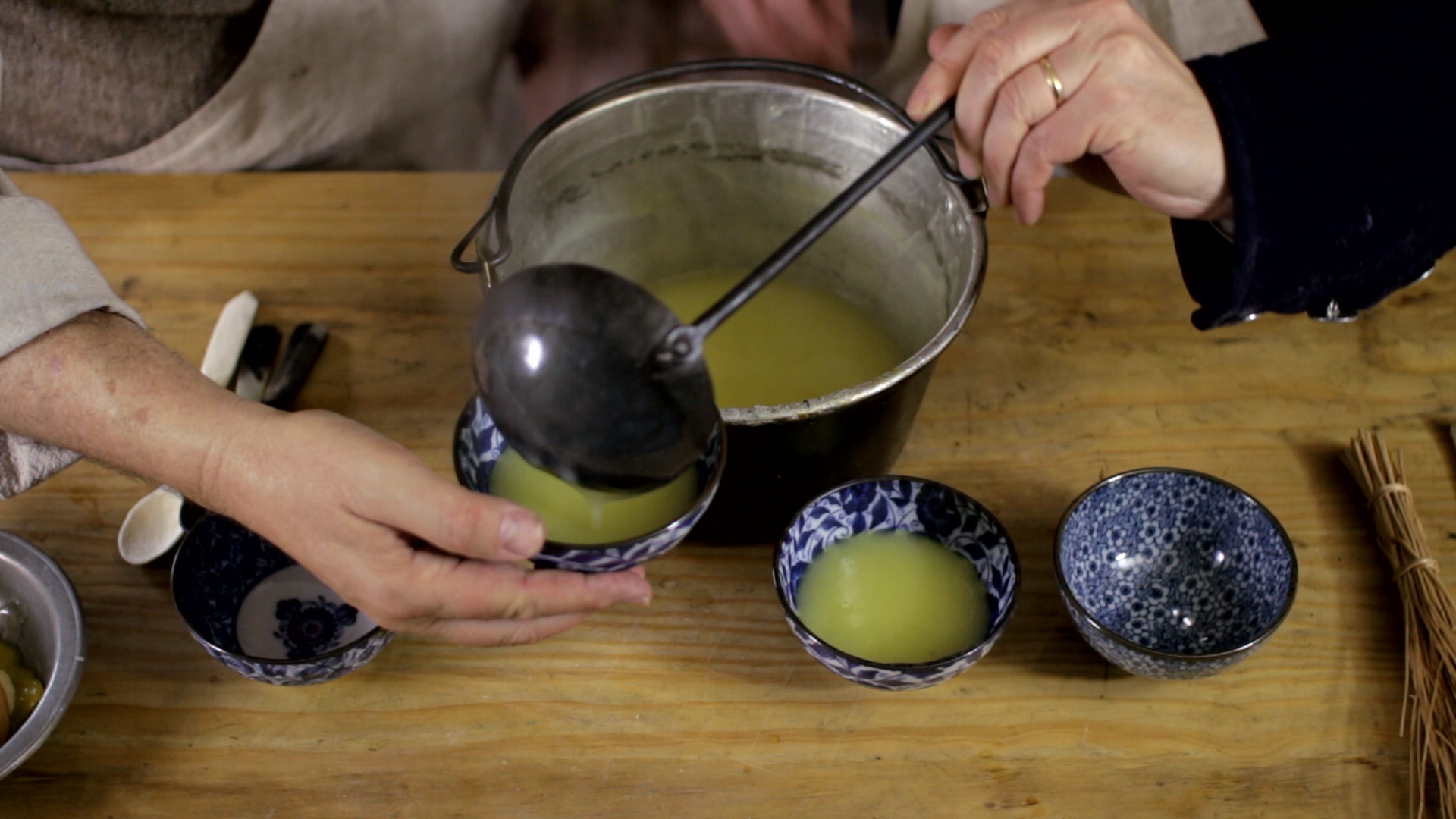
Serve the cream warm or cold “in china dishes”. (Jon serves them in these beautiful bowls.) The cream will continue to set as it cools.
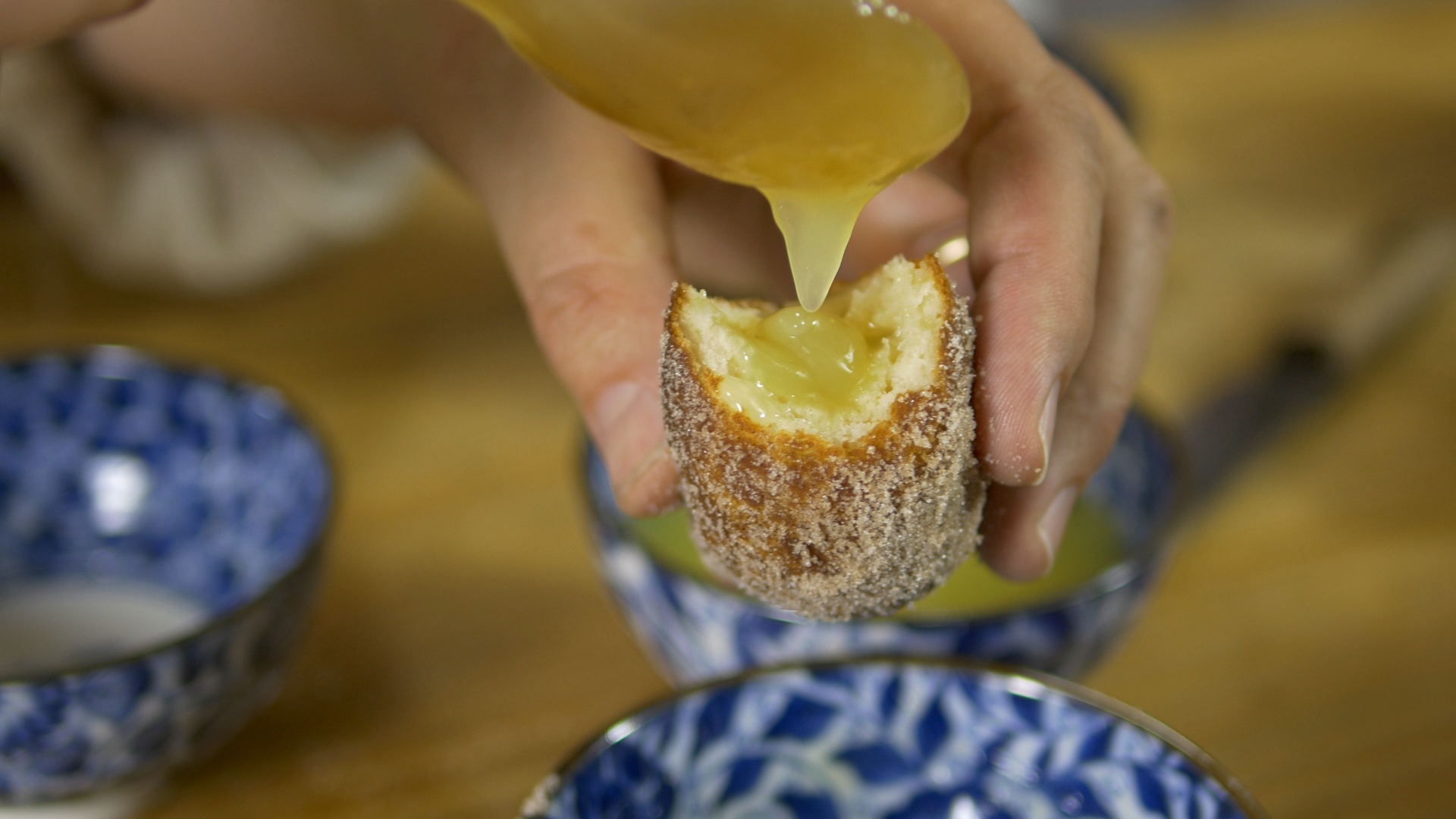
This cream can be served by itself or in other desserts. Jon, Michael, and Ivy brainstorm a few such desserts, like a tart, pie, and doughnuts.
Sweet recipes and desserts exploded in popularity during the 18th century. Cook books from that time are full of sugary treats that are as assorted in form as you can imagine. As delicious as many of these treats were, it can be a bit perplexing that they didn’t survive — at least in the North American context. The Syllabub is an example of a yummy dessert that for some strange reason has fallen into obscurity.
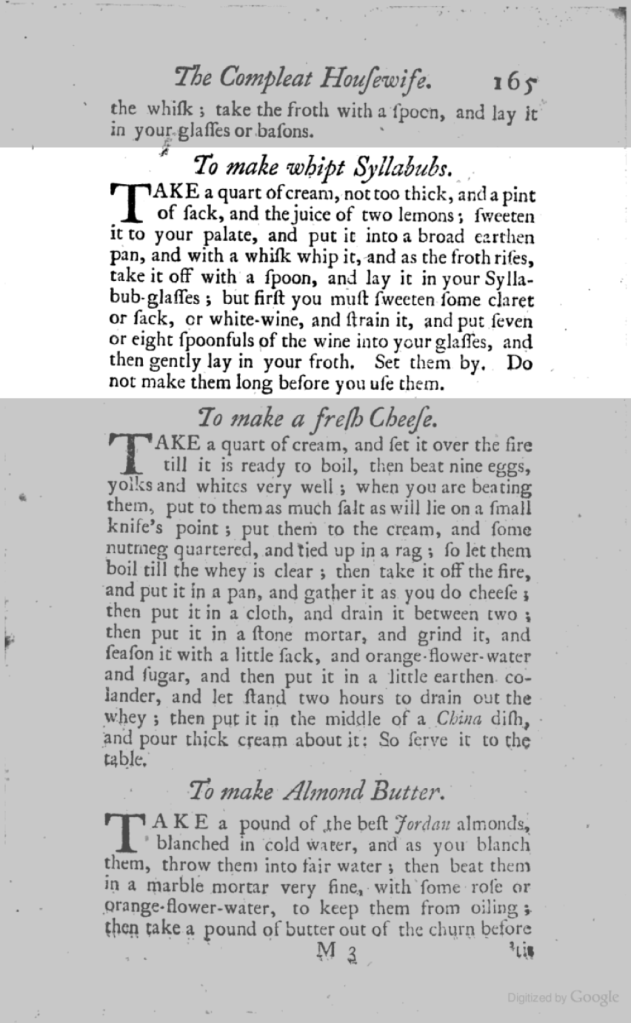
Syllabub was always a dessert beverage. Trying to define it further is a bit complicated. This is because the characteristics of syllabubs vary greatly. Recipes from many books, from over a broad span of time, call for many different wines, densities, processes, and flavors. Even just within Eliza Smith’s The Compleat Housewife (1739), are three very different recipes for Syllabubs. To simplify things we will talk about just one fantastic version; the whipped Syllabub.
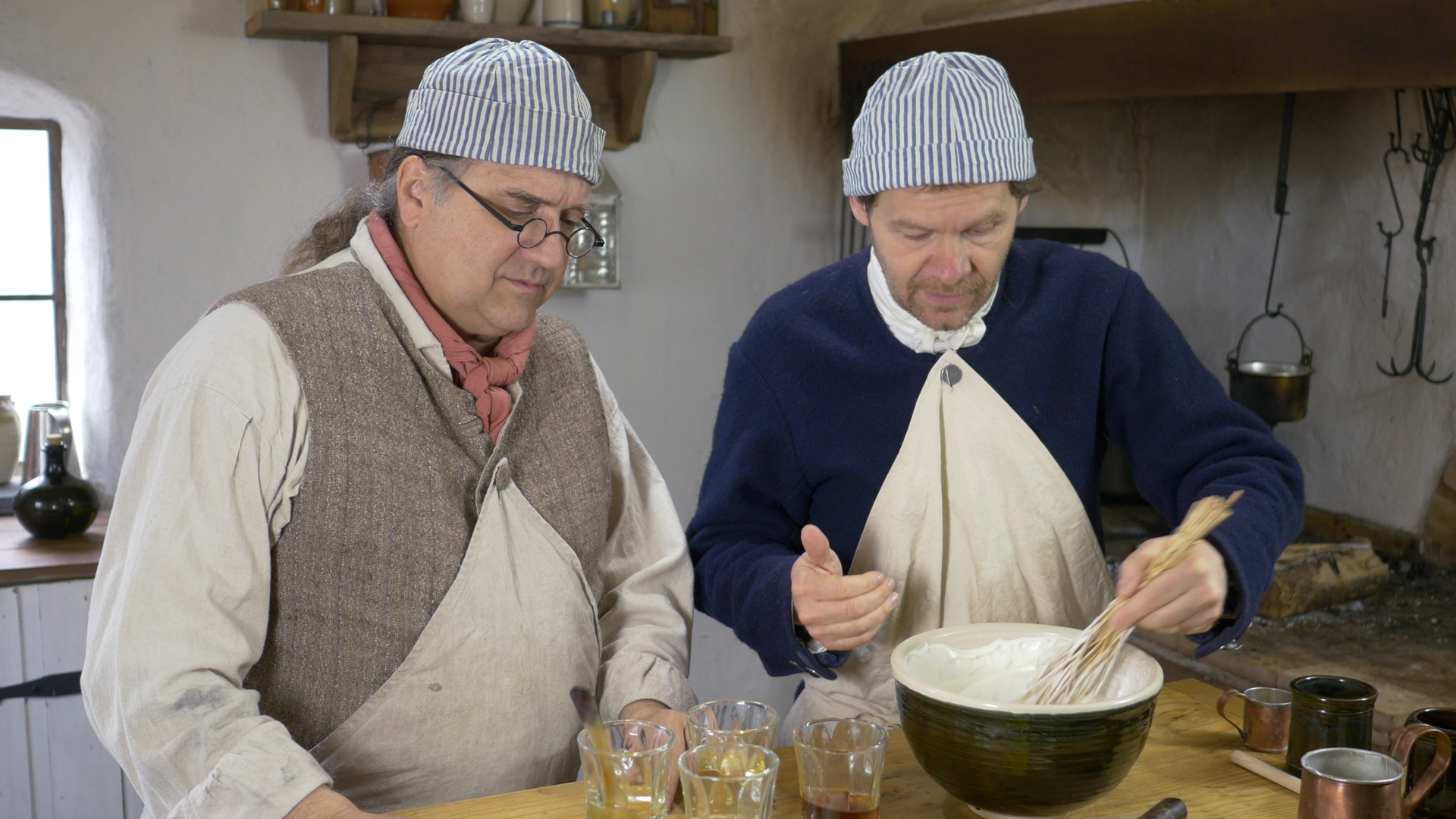
While it may be difficult to concisely define a syllabub, don’t despair! You should see the variety as a green light for your creativity! Feel free to embellish, add, subtract, substitute or change the recipe however you desire. With syllabubs, if you imagine it is delicious, it will be — this is undoubtably one of the reasons why there are so many variations in the first place. In the video below Jon and Michael make a few variations of Smith’s “Whipt Syllabubs”.
Whipt Syllabubs
Ingredients
For the drink
approximately 1/2 to 3/4 cup of white wine per serving (Smith’s recipes call for Sack or sherry, Rhenish White Wine, or Claret, but feel free to use another white wine or even hard cider. For a nonalcoholic version try white grape juice or apple juice.)
about 1/2 to 1 teaspoon sugar per serving (you may wish to eliminate the sugar altogether if you’re using a sweet wine)
For the topping
1 cup white wine or juice
1/2 cup sugar
Juice of 2 lemons (less if you desire a less-tart topping)
2 cups heavy cream
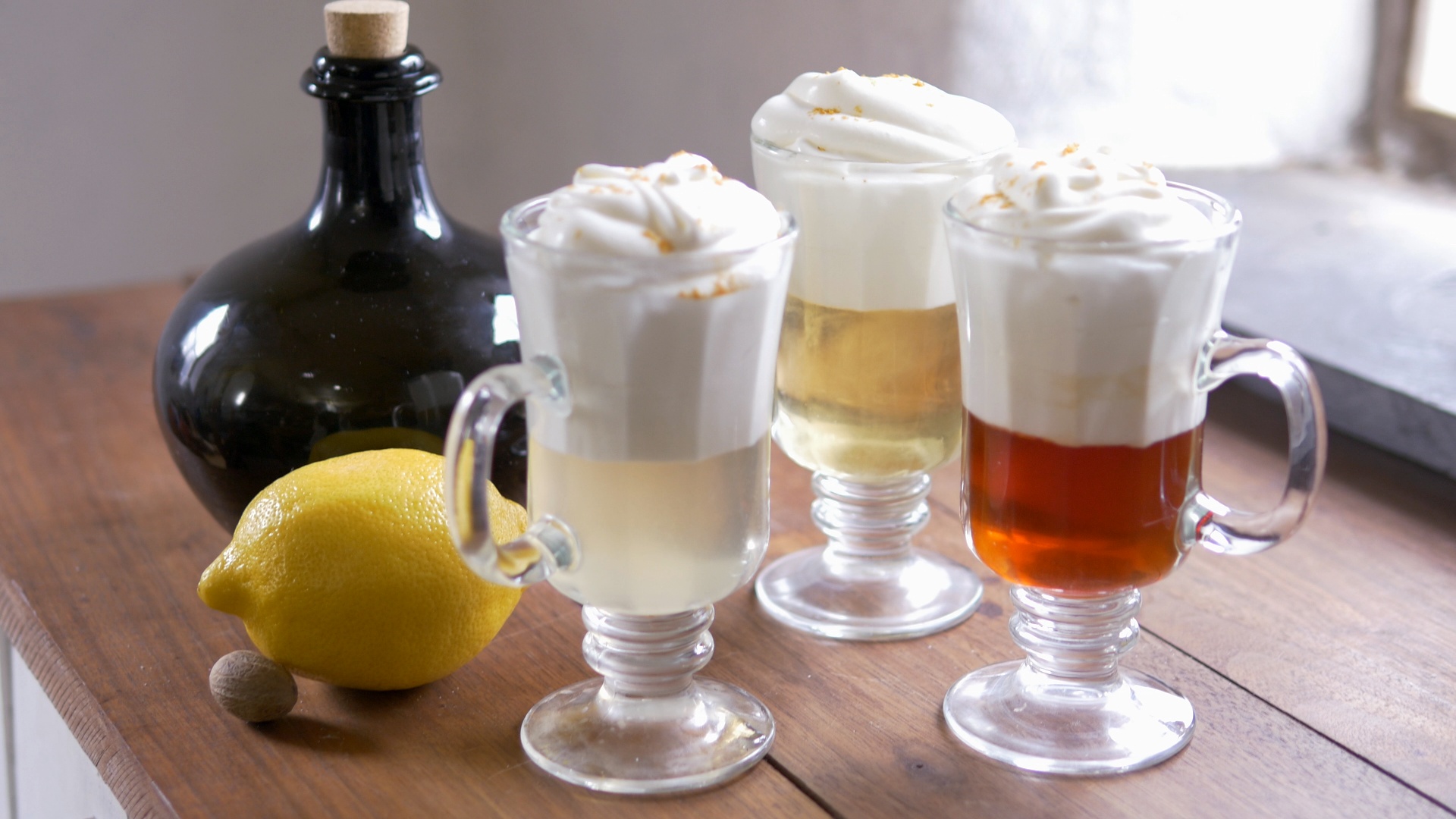
garnish with grated nutmeg and a squeeze of lemon rind
Directions
For the drink
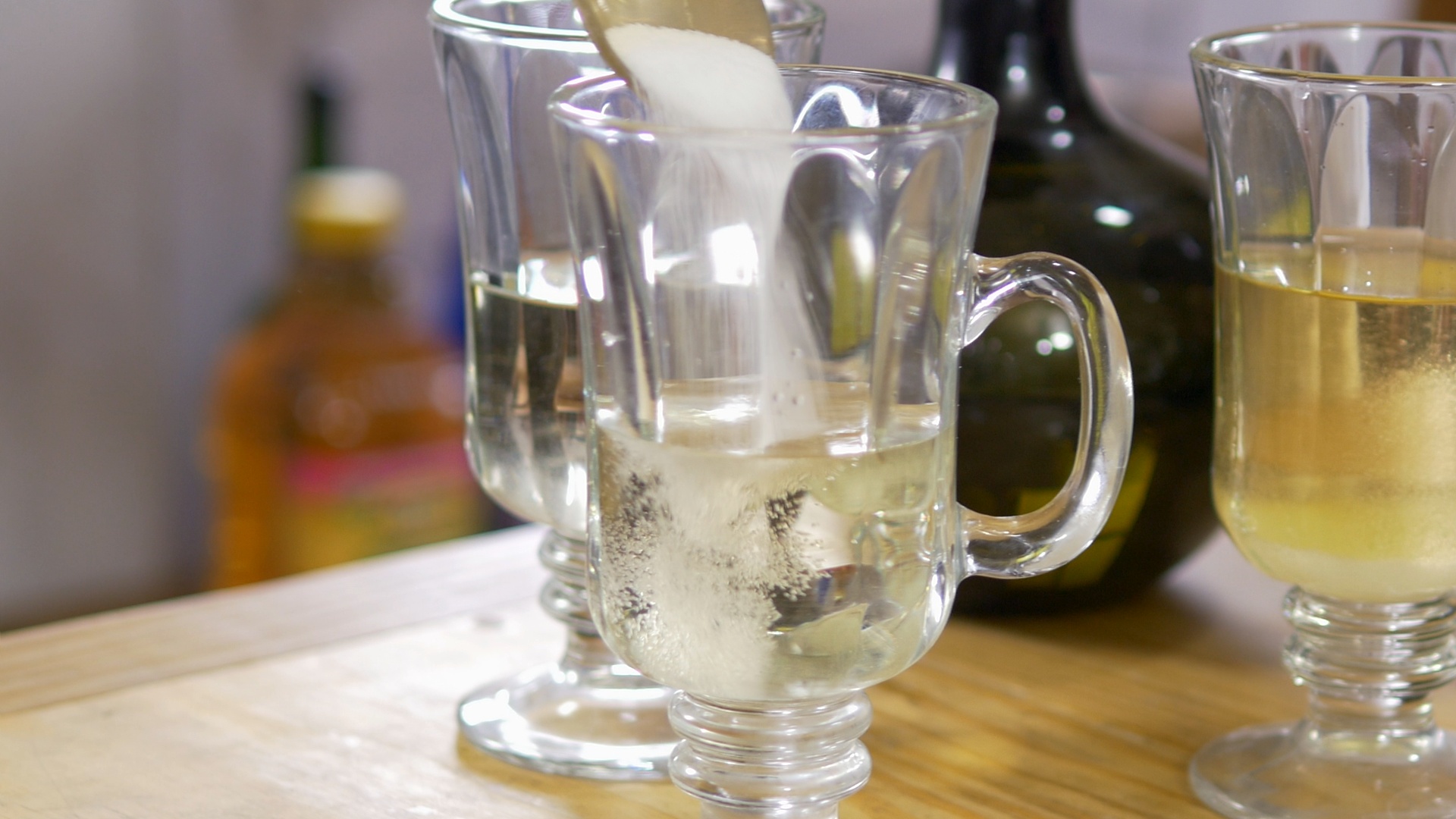
Combine the wine and sugar and stir until dissolved.
For the topping
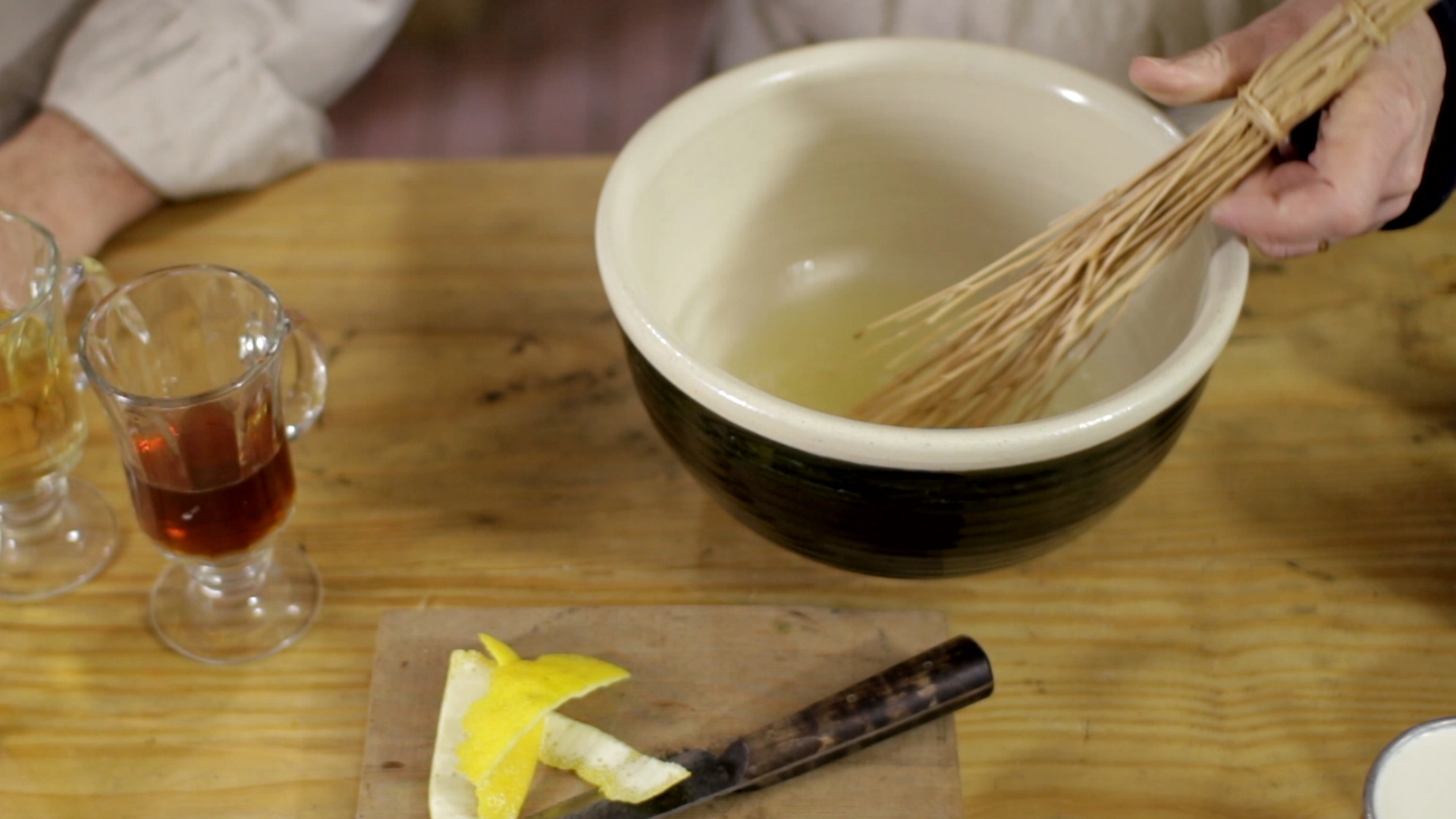
Combine the wine or juice, the lemon juice, and a 1/2 cup of sugar in a bowl and stir until the sugar is dissolved.
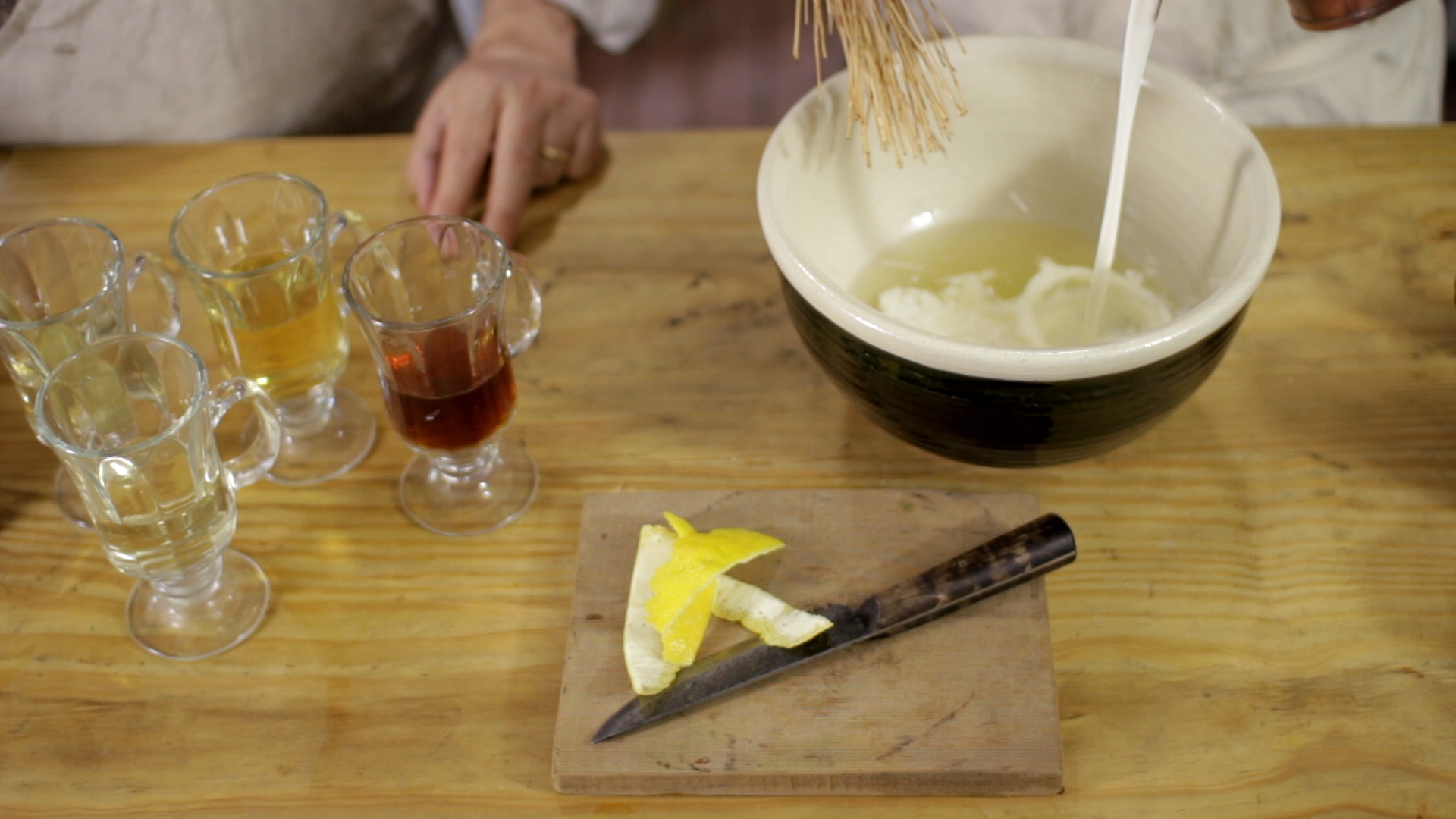
Once the sugar is dissolved, mix in the heavy cream.
Whisk the mixture until it forms soft peaks. This can be done by hand or with a mixer with a whisk attachment.
Serving Procedure
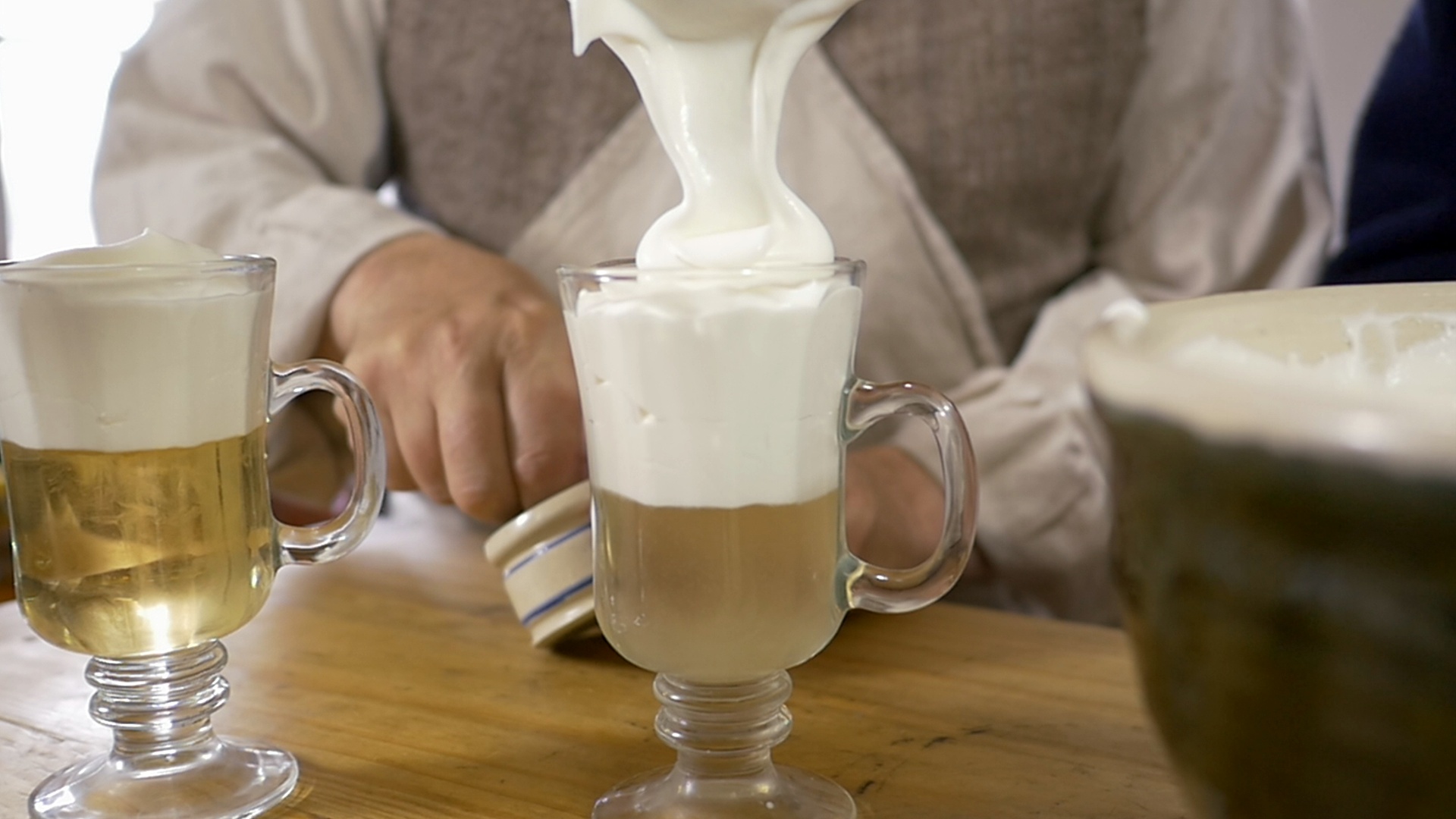
Fill each of your serving glasses until about half full, then top with the whipped cream topping.
Garnish with a sprinkle of grated nutmeg and squeeze of fresh lemon rind.
Sit back, relax, enjoy your syllabub. For yet another variation, stir the whipped topping with the drink to create what was called a “jumble syllabub.”
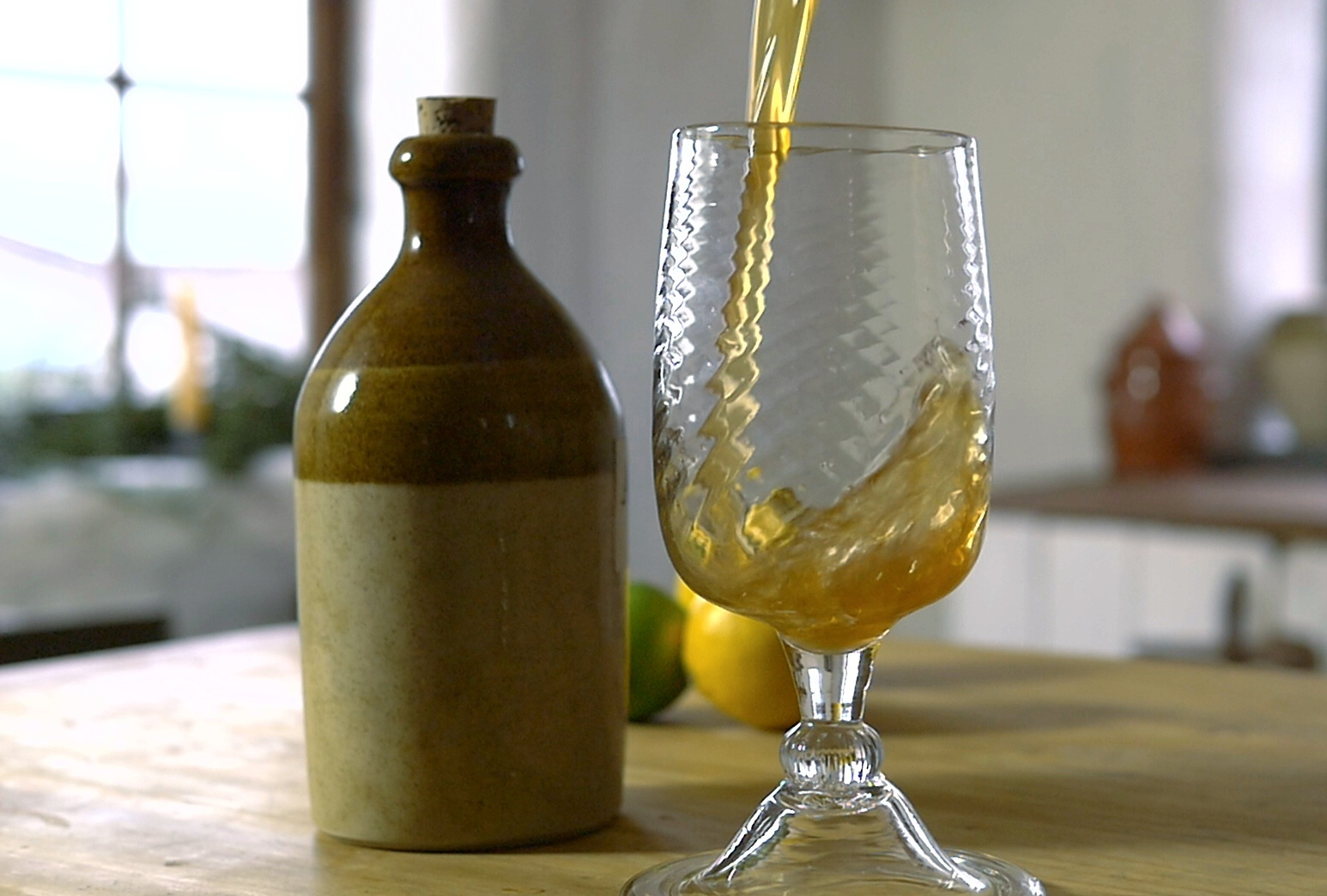
What do you drink if you’re worn out and need a little kick? An Ade, soda, an energy boost? In the 18th century, before supermarkets had shelves lined with this stuff, many people drank a delicious beverage called Switchel.
Beverages similar to switchel date all the way back to ancient Greece, and were drank all the way around the world. This recipe was typical of those popular in America from New England all the way to the Caribbean. Of course regional influences made for local flares. In Vermont, for example, Switchel was made with Maple Syrup and mixed with oatmeal. (The oatmeal was eaten as a snack once the beverage was finished.) While in Trinidad the drink was almost always mixed with special branches from the quararibea turbinata plant. (Also known as the swizzlestick tree.)
Like Jon mentions in the video above Switchel is excellent with alcohol rum. The succulent balance of vinegar and sweetness makes for an exquisite cocktail base.
Switchel
Ingredients
1/2 gallon of Drinking Water
1/2 cup of Unsulfured Molasses (not blackstrap!) — to understand better what type of molasses this is, make sure you watch the video on Switchel posted above. You may also substitute maple syrup or honey.
1/4 cup of Apple-Cider Vinegar
1 tablespoon of Powdered Ginger
Procedure
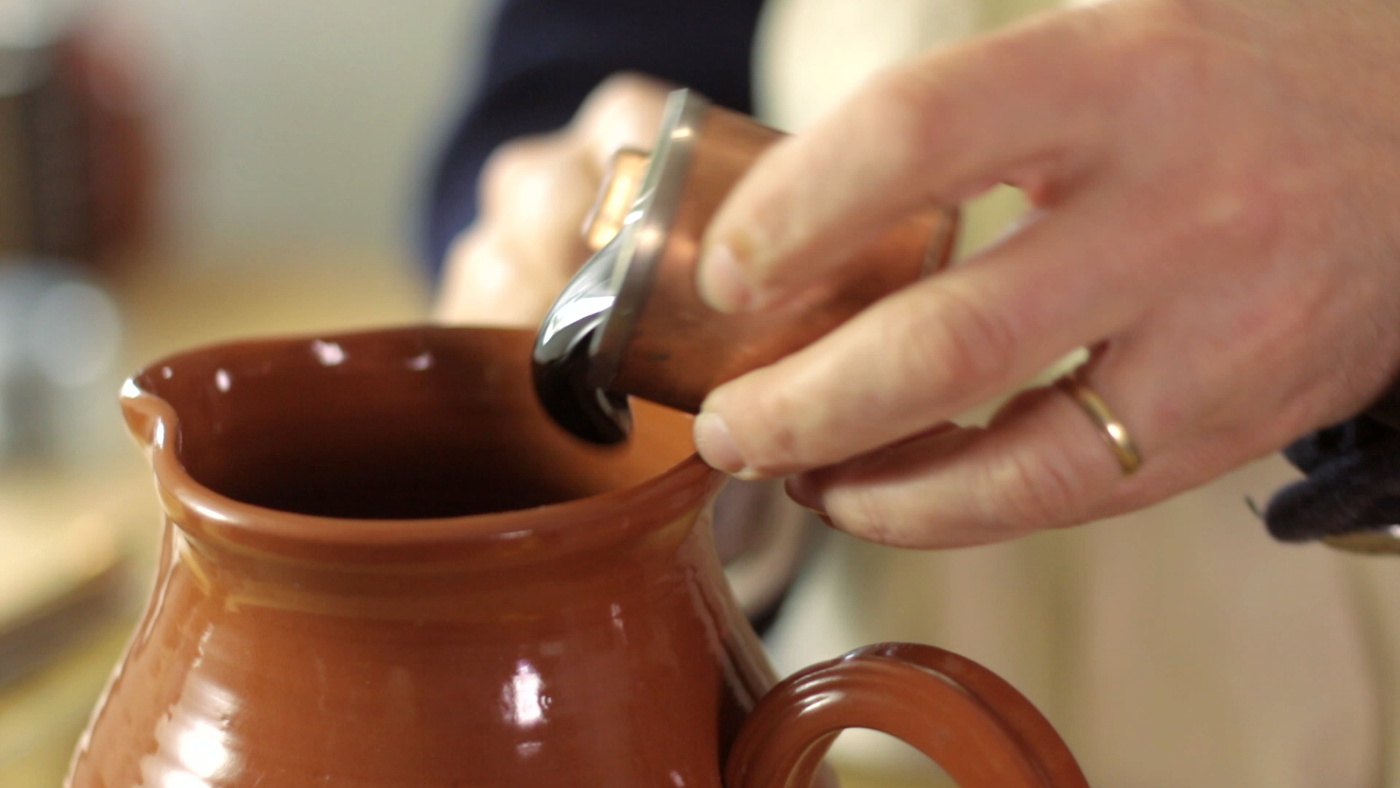
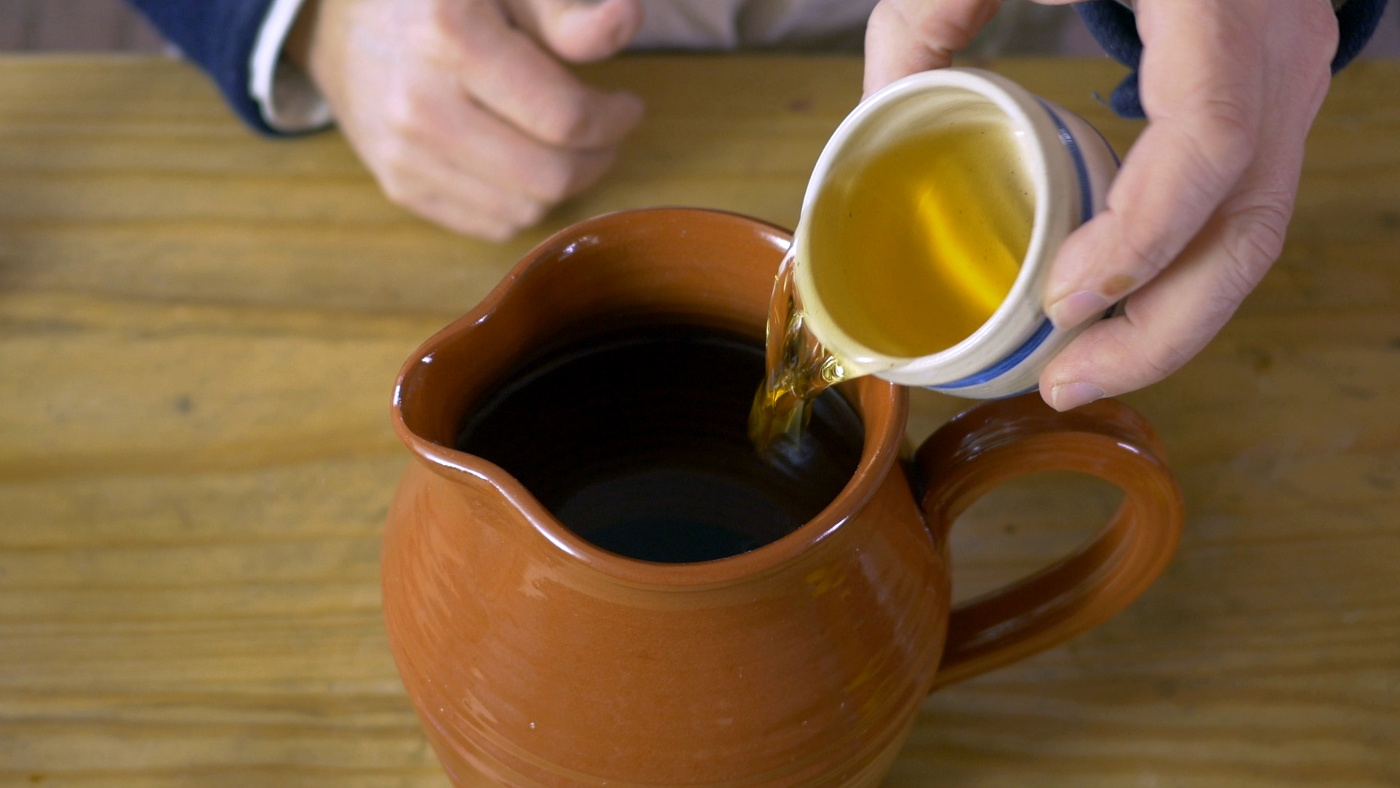
Mix all ingredients in a large vessel. Stir vigorously, especially making sure the ginger is well assimilated. Refresh yourself accordingly!
Switchel, along with many other tasty beverages, can be found in Libations of the Eighteenth Century by David Alan Woolsey, sold at Jas. Townsend and Son.
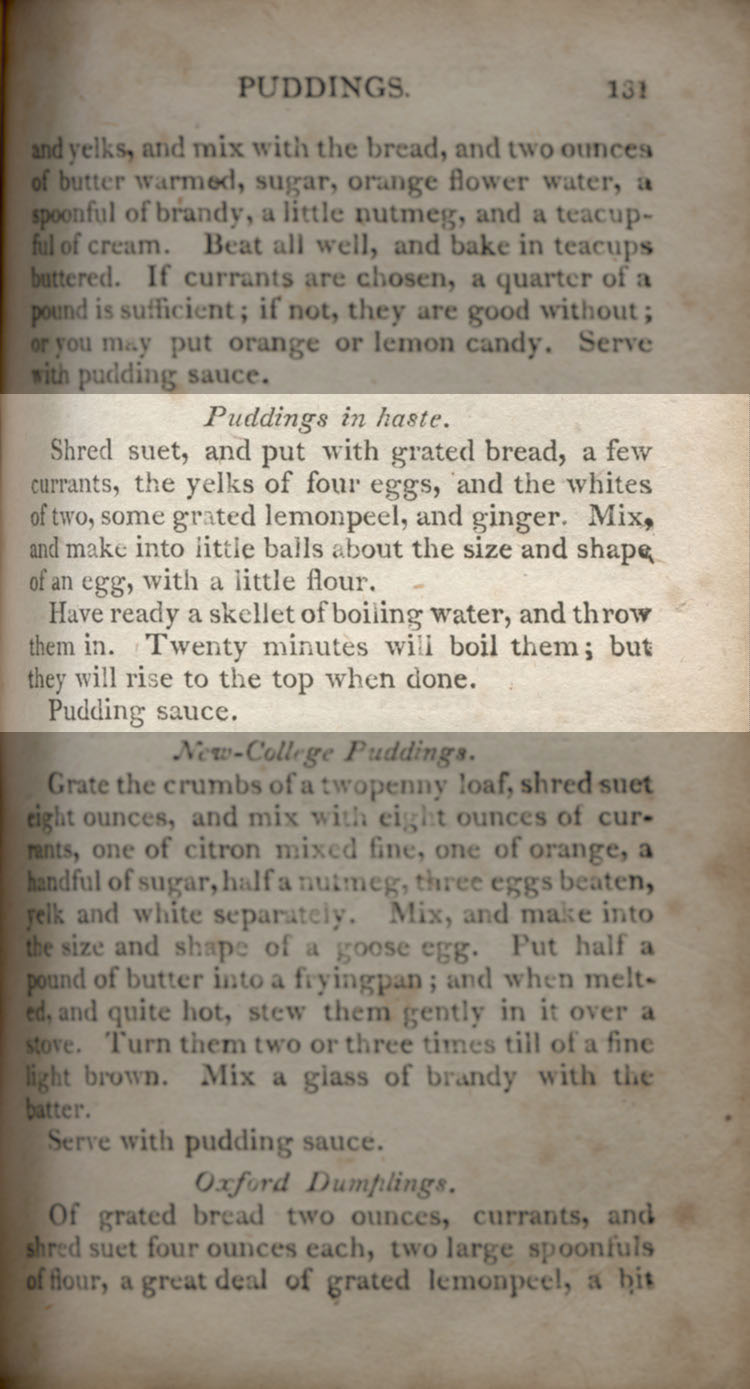
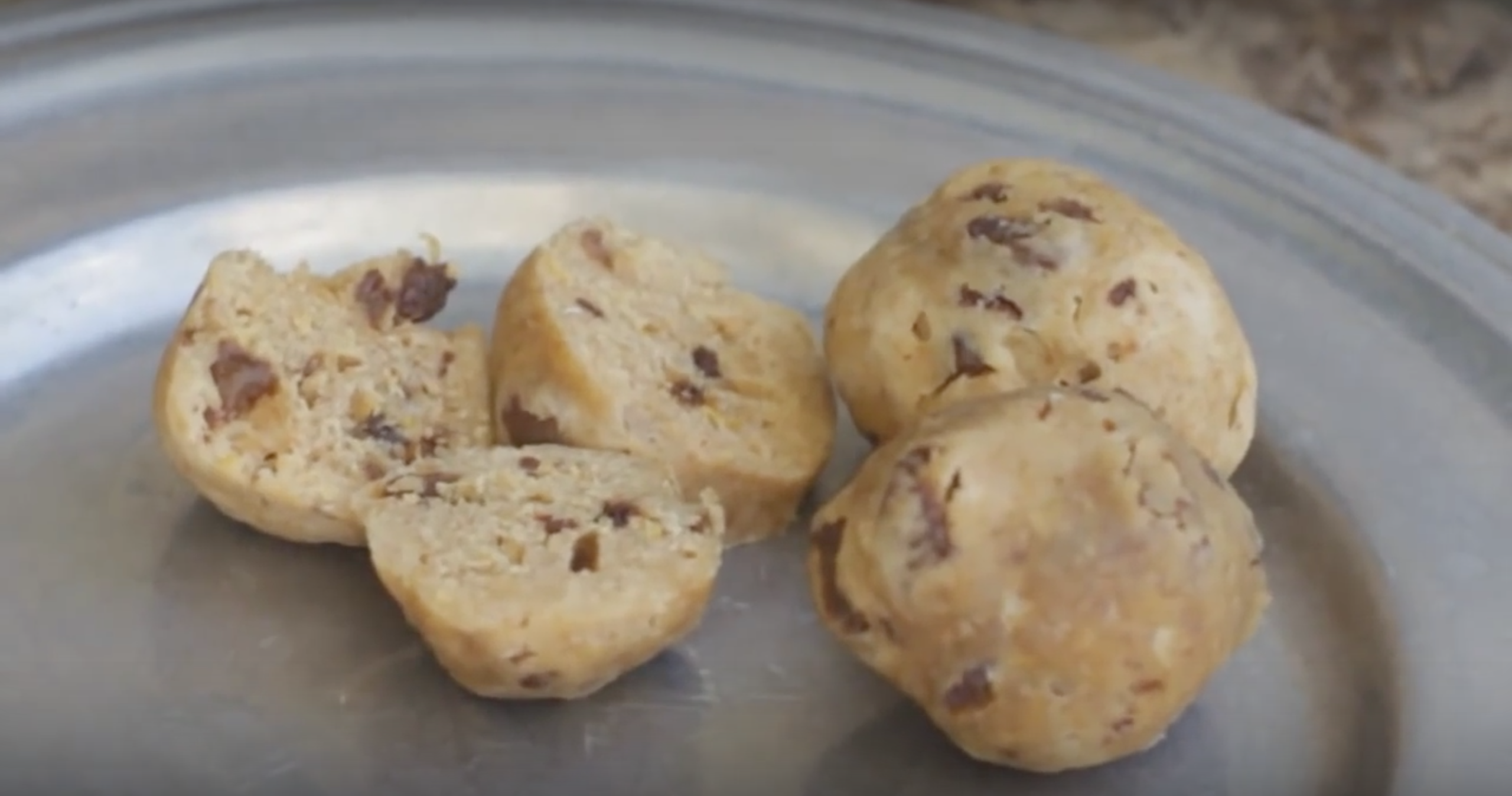
In the 18th century, puddings were once a culinary staple of much of the western world. Many types existed but most called for long cooking times. Hasty puddings (or as they were often called “puddings in haste”) became popular for their convenience. This was especially favorable for frontiersmen and frontierswomen who, armed with versatile and expedient cooking utensils like the Dutch oven, desired a hearty and delicious meal on-the-go. Jon discusses Dutch ovens and a lovely recipe for a hasty pudding in the video below:
This Hasty Pudding recipe is from Maria Eliza Rundell’s 1807 cookbook A New System of Domestic Cookery:
Puddings in Haste (makes 10-12 puddings)
Ingredients (Measurements by Jon Townsend)
1 Cup fine bread crumbs or crushed Ship’s Biscuits (purchasable here)
1/2 cup Zante currants or raisins
1/2 lemon zest
1 cup Grated Suet (Make sure to watch the episode “Rendering Suet” or read the blogposts, “Suet” parts one through four, to better understand the importance of and how to work with this product.)
Flour for Dredging
2 Eggs
2 Egg yolks
1/2 teaspoon powdered ginger
Preparation
Bring water to a boil in a Dutch oven
In a bowl incorporate evenly the bread crumbs, raisins, lemon zest, and suet.
Whisk together the eggs, egg yolks, and ginger.
Mix all of ingredients together until the dough is even. (It should be quite thick.)
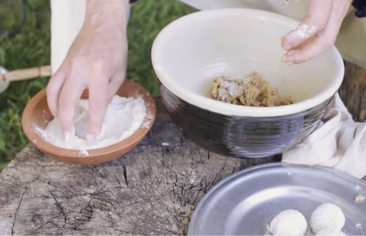
Roll the mixture into egg sized balls.
Dredge the pudding balls in flour.
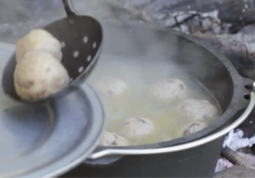
Cook in boiling water for 15-20 minutes.
Remove them from the water and let them dry for about 3 minutes.
Serve them hot or cold.
Rundell recommends serving her recipe with a “pudding sauce”. Below is a pudding sauce recipe:
Pudding Sauce
Ingredients
1 Cup Butter (cubed and chilled)
1 Cup Sugar
1 Cup Sack (or Sherry Wine)
Preparation
Simmer the sugar and sack together in a small saucepan.
Remove the mixture from fire and immediately add cold butter (a few cubes at a time) while whisking vigorously.
Serve immediately atop the hasty pudding and enjoy!
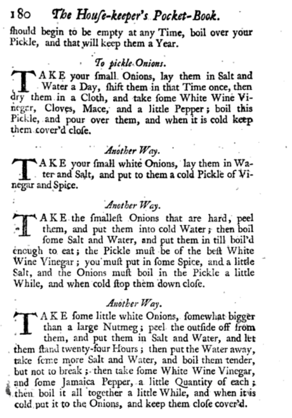
Although pickling has been around since the dawn of time, records of food preservation techniques exploded in the 1700s. Helped by the growing industrialization of the printing industry, house management handbooks and cookery books became high in demand. Food preservation techniques became ubiquitous; pickling went 18th century viral. The premise of soaking foodstuffs in a highly acidic (vinegary) environment to protect the food from spoilage remained unchanged, but the recipes and methods varied greatly. The types of pickled foods were diverse as well. Throughout the western world, pickles were made of locally prized ingredients. One very popular English vegetable to preserve was onions. The following recipe comes from Sarah Harrison’s 1739 cookbook The House-Keeper’s Pocket-Book, (however, the special onion preparation we use below originates from another source).
The plethora of spices in these pickling recipes is fascinating. Ginger (which is discussed on the previous page) and Jamaica pepper (known today as allspice) are influences from opposite sides of earth! In something as ordinary as a pickle, we can see how global colonialism affected all aspects of British culture.
Pickled Onion Recipe Our recipe for is for approximately one pint of pickled onions. We’re using a stoneware lidded jar, but a glass canning jar will work as well. You can adjust the amounts below if you choose to make a larger batch.
Ingredients
20 to 30 Pearl Onions
Water (enough for blanching the onions)
1 cup Malt Vinegar or Distilled Vinegar
1 ounce of Kosher Salt or Pickling salt (not iodized)
1/2 teaspoon of peppercorns
3 whole cloves
1 tablespoon of fresh ginger (thinly sliced)
optional seasonings: 1/3 nutmeg (crushed) and three bay leaves
Directions
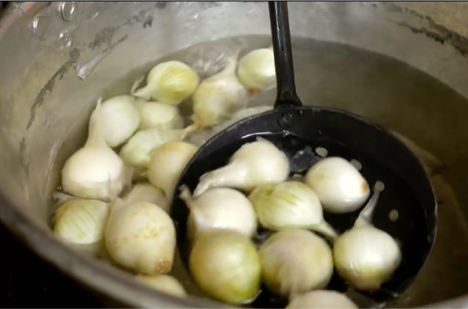
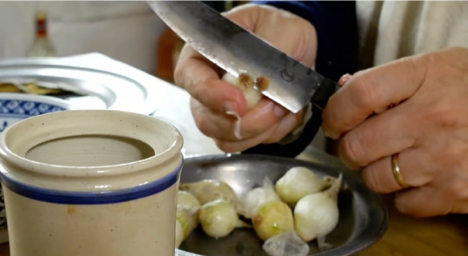
Put all of the onions and water in a pot and place over high heat. As soon as the water comes to a boil, remove from the heat, and strain the onions. Set the onions aside to let them cool completely.
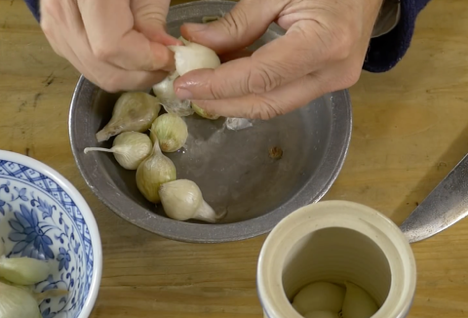
Once the onions are cool, cut off the roots.
Separate the onions from their outer skins by gently squeezing them on the end opposite from the root cut. Place the blanched onions in your storage jar.
To Prepare Pickling Liquid
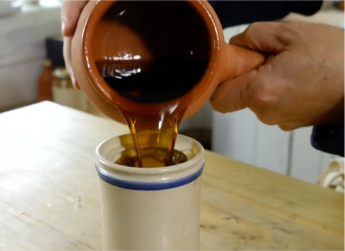
Mix the vinegar and all of the spices in a non-reactive saucepan and bring the liquid to a boil. Remove from the heat and let cool.
Final Preparation
Put all of the ingredients in the Jar and let the onions pickle for 10 days in your refrigerator.
Here’s a recipe that was apparently popular enough that it was copied almost verbatim in several 18th century cook books. It’s a recipe for fritters. A fritter, also occasionally called a fraze, was a fried pastry, like a doughnut. They were either skillet fried or deep fried. The batter could be thin or thick — more like a dough. This particular recipe was exquisitely simple, calling for only four to five ingredients.
Here is Hannah Glasse’s copy from the 1774 edition of her cookbook, The Art of Cookery.
Here is our adaptation, changing a few things up where necessary, but staying well within period-correct methods and techniques:
Hasty Fritters
Ingredients:
1 – 12oz. bottle of any Light* Ale or Hard Apple Cyder
approximately 2 cups All Purpose Flour
1/4 – 1/3 cups Zante Currants or 1 Apple (diced) or both
About 2-lbs Lard (or or other fat**, e.g., shortening or vegetable oil) for frying
*Hard apple cyder adds a wonderful taste to this recipe. If you chose to use an ale instead, use one that is not heavily hopped or bitter. Any off-the-shelf brand-name “lite” American beer will work, however, you’ll be missing out on some of the flavor that a nice honey brown ale, for instance, can add.
*All of the recipe copies I found for this dish called for frying in butter. This would have typically been a fairly expensive method of frying over, let’s say, Lard. If you choose to use butter, be sure to clarify it first by slowly melting it over low heat and pouring off the oil from the dairy solids that precipitate to the bottom. If you do not take this step, the solids will burn before the butter reaches frying temperatures, resulting in a burnt flavor imparted to the fritters.
Directions:
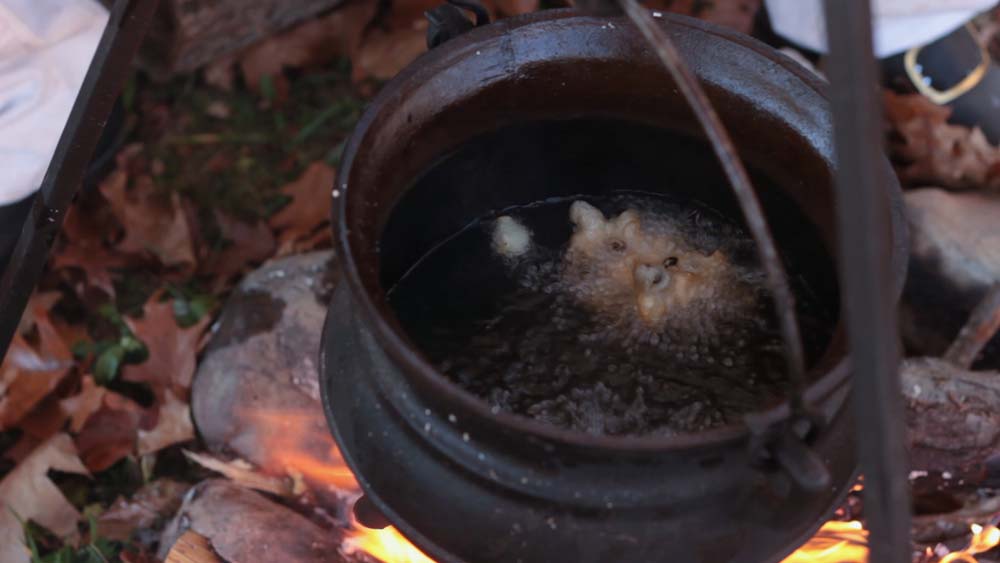
Heat your frying fat to about 350-degrees (F).
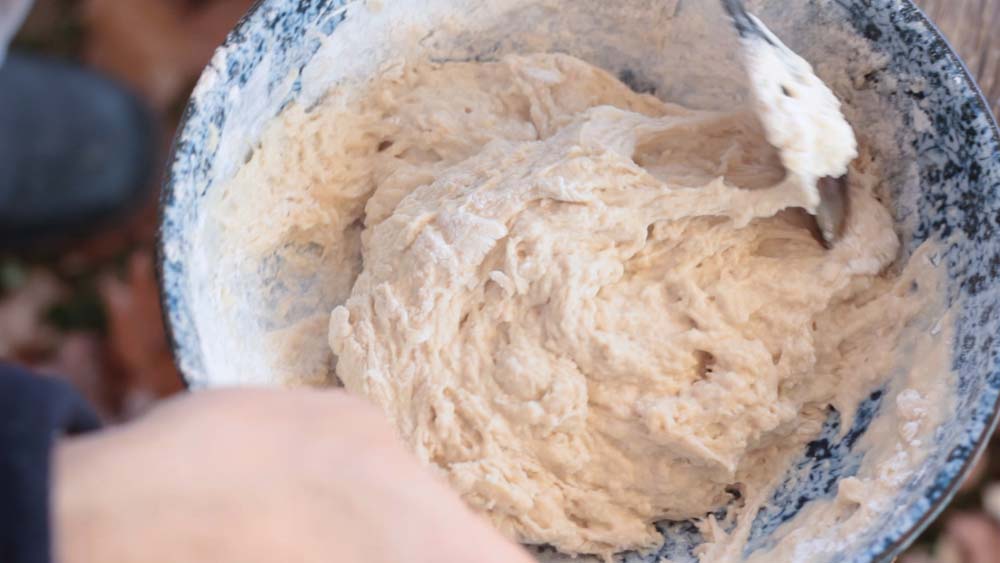
Pour your ale into a large mixing bowl and sift the flour into it, stirring until a sticky dough forms. It may take a little more or a little less than 2 cups of flour.
Blend in your diced apple and/or your Zante currants. I prefer using both simply for the additional flavor and sweetness. Some recipes for apple fritters suggest a little ground nutmeg or cinnamon. You can also add a pinch of salt of you wish. That’s your call. I love the simplicity of this recipe, and chose to leave those seasonings out. I did not regret my decision.
Carefully drop in dollops of the batter, about the size of a walnut or small egg, into your hot frying fat, making sure they don’t stick together. Fry them for 4 or 5 minutes, or until they are golden brown on the bottom side. The recipe suggests turning the fritters with an “egg slice.” If in case you’re like us and had never heard of an egg slice before, it’s simply a spatula. Fry the fritters for 3 to 4 minutes longer, or until they are an even gold brown. If your dollops are too big, you will likely end up with a nicely browned fritter that’s still doughy on the inside.
Ale in this recipe acts as a leavening agent. The ale’s carbonation will puff up the dough while it fries.
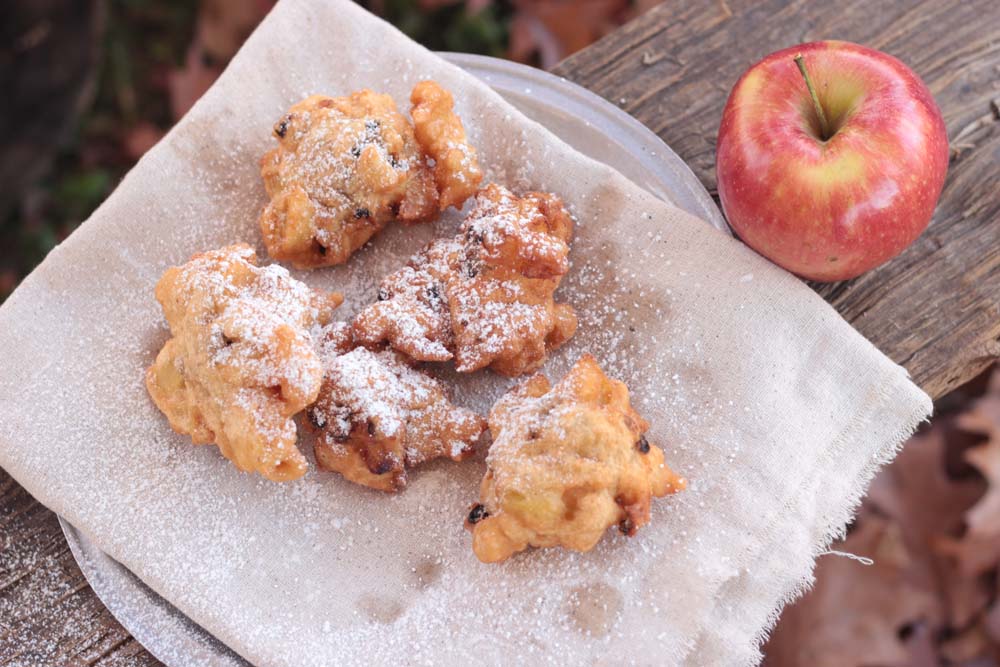
Carefully remove the fritters from your hot fat, and drain on layers of paper or a clean cloth. Dust with powdered sugar and stand aside before you’re trampled.
As a follow-up to my last post as well as to our latest video, I’m offering a couple of 18th century recipes from the 1767 cookbook, Primitive Cookery; or the Kitchen Garden Display’d. As I previously mentioned, this book was a collection of recipes that were “borrowed” from other sources: the two recipes I’m highlighting were originally from Hannah Glasse’s earlier cookbook The Art of Cookery. Both recipes happen to use rice as their main ingredient.
Rice was an important food in 18th century English diets. That topic, however, is far too complex to be addressed at this time. Entire books have been written on the subject. One that I would highly recommend is Carolina Rice Kitchen: The African Connection by Karen Hess.
I struggled a bit writing this post. Normally, I enthusiastically celebrate 18th century foods. In contrast, this post has brought a certain degree of sobriety.
Much of the rice enjoyed on English tables originated either from West Africa or South Carolina and Georgia. While indigenous rice had been cultivated in Africa for thousands of years, it wasn’t until possibly the 16th century that the finer, whiter oriental varieties were introduced. The crop was so successful there and the grain so popular, that its production quickly surpassed the indigenous varieties.
By the late 1600s, these strains of rice had also been introduced to the swamplands of South Carolina and portions of Georgia. Within a few years, hundreds of tons of rice were being exported. The success of the crop in the colonies was directly due to the expertise of African slaves brought from the rice-growing regions of West Africa.
We cannot correct the inhumanities of history by ignoring them. While the purpose of this post is to examine two very simple rice recipes, I do not want to overlook the reality that lies behind them. The fact is, the luxuries enjoyed by so few were the result of the blood, sweat, and tears of so many.
So are these recipes.
Having said that, here are the recipes. They are exceptionally easy to make.
Carolina rice was a long grain rice. In my experience with these recipes, I found a medium grain rice to work better than a modern extra-long grain rice. The quantities used in these recipes are almost irrelevant. There is a great deal of latitude in terms of how much rice you use. I also found that while you need to leave some room in the pudding cloth for the rice to expand, if you leave too much, the end result will be a bag of soggy rice rather than a well-formed pudding ball.
One other word of advice draws upon 18th century kitchen wisdom that is not mentioned in these recipes: once the puddings are done boiling, you may find it easier to remove them from the pudding bag if you first dip them in cold water for a few seconds.
Finally, this recipe calls for a sauce of equal parts melted butter and sugar. In my opinion, the sauce really makes these dishes. If, however, you choose to not use butter, you may want instead to try drizzling some sherry sweetened with a little sugar.

















 Savoring the Past